


1. Introduction
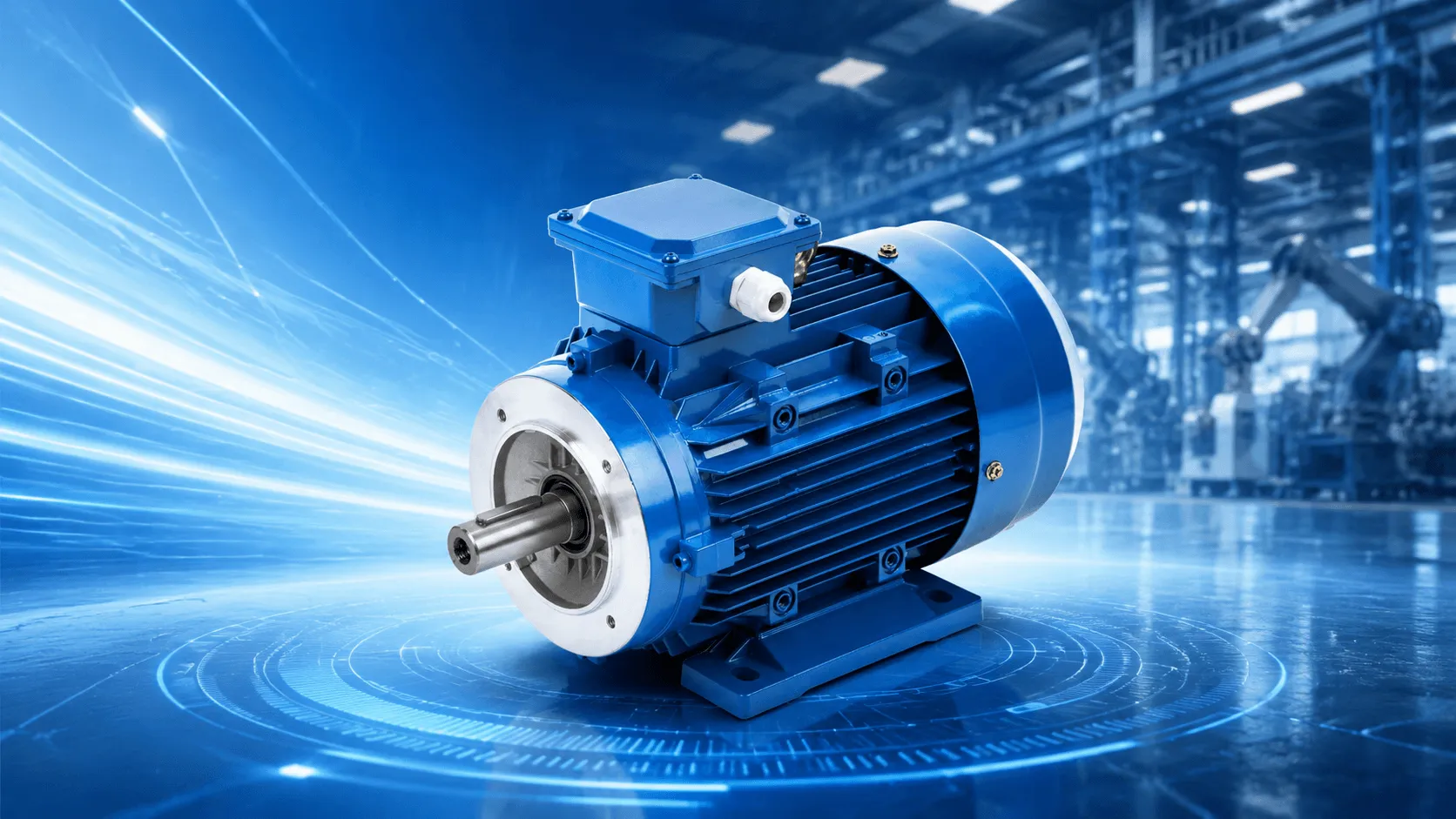
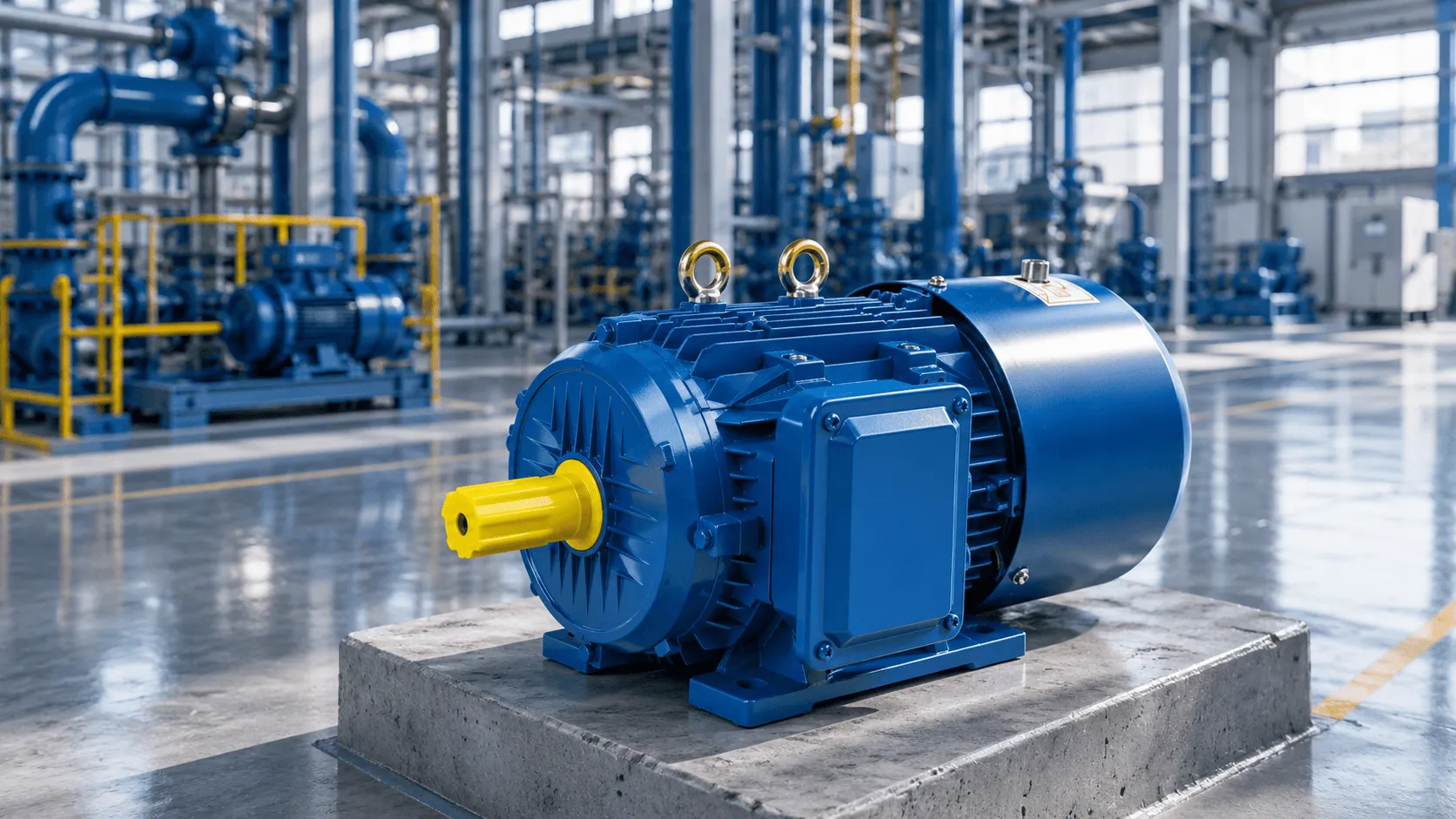
The YE2 series high-efficiency three-phase asynchronous motor represents a pivotal milestone in China’s industrial motor evolution — bridging the gap between legacy standard-efficiency designs and modern premium-efficiency requirements. Developed in response to GB 18613-2012 (China’s mandatory motor energy efficiency standard) and harmonized with IEC 60034-30-1 IE2 international efficiency classification, the YE2 series established the foundation for energy-conscious motor design in the Chinese manufacturing sector.
While subsequent regulatory updates (notably GB 18613-2020, effective June 1, 2021) have elevated the minimum efficiency requirement from IE2 to IE3 for most general-purpose motors, the YE2 series remains extensively deployed across existing industrial infrastructure, export markets with IE2 acceptance, and applications where IE2 represents the optimal balance of efficiency and capital cost. Understanding the YE2 series is therefore essential for maintenance engineers, procurement professionals, and system designers operating across diverse regulatory environments.
This guide provides a comprehensive technical reference for the YE2 series, covering design standards, performance characteristics, efficiency analysis, and practical application guidance.
2. Regulatory Framework & Efficiency Classification
2.1 IEC 60034-30-1 Efficiency Classes
The International Electrotechnical Commission defines motor efficiency classes based on full-load efficiency at rated voltage and frequency:
表格
| Efficiency Class | Designation | Typical Full-Load Efficiency (4-pole, 50 Hz, 75 kW) | Loss Reduction vs. IE1 | Regulatory Status (Global) |
|---|---|---|---|---|
| IE1 | Standard Efficiency | 91.7% | Baseline | Phased out in EU, China, and most developed markets |
| IE2 | High Efficiency | 93.2% | ~20% lower losses | Mandatory minimum in some regions; acceptable with VFD in EU |
| IE3 | Premium Efficiency | 94.5% | ~35% lower losses | Mandatory minimum in EU (≥0.75 kW), China, Brazil, etc. |
| IE4 | Super Premium Efficiency | 95.6% | ~50% lower losses | Voluntary premium; growing market share |
| IE5 | Ultra-Premium Efficiency | 96.7% | ~60% lower losses | Emerging standard; limited commercial availability |
2.2 GB 18613 Evolution: YE2’s Regulatory Context
表格
| Standard Version | Effective Date | Minimum Efficiency Requirement | YE2 Compliance Status |
|---|---|---|---|
| GB 18613-2006 | 2008 | EFF2 (approx. IE1) | Not applicable (pre-YE2 era) |
| GB 18613-2012 | 2012–2021.5.31 | Grade 3 = IE2 | YE2 fully compliant — mandatory minimum |
| GB 18613-2020 | 2021.6.1 onwards | Grade 3 = IE3 | YE2 non-compliant for new domestic sales; IE3 (YE3) mandatory |
Key Regulatory Notes:
- China domestic market (post-2021): YE2 motors can no longer be sold as new general-purpose motors for S1 duty applications within China. They may be sold for export, replacement parts, or exempt applications (integrated machines, submersible motors, etc.).
- Export markets: Many developing markets and specific industrial applications still accept IE2 as the minimum or reference efficiency level.
- EU market: IE2 motors may be placed on the market only if equipped with a Variable Frequency Drive (VFD) per Regulation (EU) 2019/1781.
- Retrofit applications: YE2 motors remain valid replacement units for existing IE1/IE2 installations where upgrading to IE3 is not economically justified.
2.3 Global MEPS Comparison (IE2 Relevance)
表格
| Region / Country | Regulation | Scope | IE2 Status | Implementation Date |
|---|---|---|---|---|
| European Union | EU 2019/1781 | 0.12–1,000 kW, 2/4/6/8 poles | Allowed only with VFD | 2021 |
| China | GB 18613-2020 | 0.12–1,000 kW, 2/4/6/8 poles | Phased out for new sales | 2021.6.1 |
| USA | DOE 10 CFR 431 | 1–500 HP, 2/4/6/8 poles | Equivalent to NEMA Premium | 2016 |
| Brazil | ABNT NBR 17094 | 0.12–370 kW, 2/4/6/8 poles | Minimum (IE3 equivalent) | 2019 |
| Australia / NZ | GEMS Act 2019 | 0.73–185 kW, 2/4/6/8 poles | Minimum | 2019 |
| India | IS 12615 | 0.12–1,000 kW, 2/4/6/8 poles | Minimum (IE2 level) | 2019 |
| Switzerland | Adopted EU regs | 0.12–1,000 kW | Allowed with VFD | 2021 |
| Turkey | Adopted EU regs | 0.12–1,000 kW | Allowed with VFD | 2021 |
3. Design Standards & Construction
3.1 Compliance Standards
表格
| Standard | Scope | YE2 Compliance |
|---|---|---|
| IEC 60034-1 | Rotating electrical machines — Rating and performance | Full compliance |
| IEC 60034-2-1 | Standard methods for determining losses and efficiency | Full compliance (IE2 testing) |
| IEC 60034-5 | Degrees of protection provided by enclosures (IP code) | IP55 standard |
| IEC 60034-6 | Methods of cooling (IC code) | IC411 (TEFC) standard |
| IEC 60034-7 | Classification of types of construction and mounting | IM B3, B5, B35, etc. |
| IEC 60034-8 | Terminal markings and direction of rotation | Full compliance |
| IEC 60034-12 | Starting performance of single-speed motors | Tst/Tn ≥ 1.8–2.2 |
| IEC 60034-30-1 | Efficiency classes of single-speed motors | IE2 class compliance |
| GB 18613-2012 | Minimum allowable values of energy efficiency | Grade 3 compliance |
| GB 755-2008 | Rotating electrical machines — Rating and performance | Full compliance |
| GB/T 1032 | Test methods for three-phase induction motors | Full compliance |
3.2 Construction Features
表格
| Component | Specification | Engineering Benefit |
|---|---|---|
| Frame (H63–H160) | Die-cast aluminum alloy (ADC12) | Lightweight, excellent heat dissipation, corrosion resistance |
| Frame (H180–H355) | Cast iron (HT250) | High mechanical strength, vibration damping, durability |
| Stator Core | Cold-rolled silicon steel (50W470 or 50W600), 0.5 mm laminations | Low core loss, high magnetic permeability |
| Rotor Core | Same silicon steel as stator | Consistent magnetic properties, balanced losses |
| Rotor Bars | High-conductivity aluminum die-cast | Low rotor resistance, high starting torque, efficient energy conversion |
| End Rings | Aluminum integral with rotor bars | Robust construction, uniform current distribution |
| Winding Wire | QZ-2/155 (Class F) polyester-imide enameled copper | High thermal endurance, excellent dielectric strength |
| Insulation System | Class F (155°C) with Class B (130°C) temperature rise margin | 25K safety margin ensures long insulation life |
| Shaft | 45# carbon steel (H63–H132) or 40Cr alloy steel (H160–H355) | High strength, fatigue resistance, precise machining |
| Bearings | Deep groove ball bearings, C3 clearance (SKF, NSK, or equivalent) | Long life, low friction, high-speed capability |
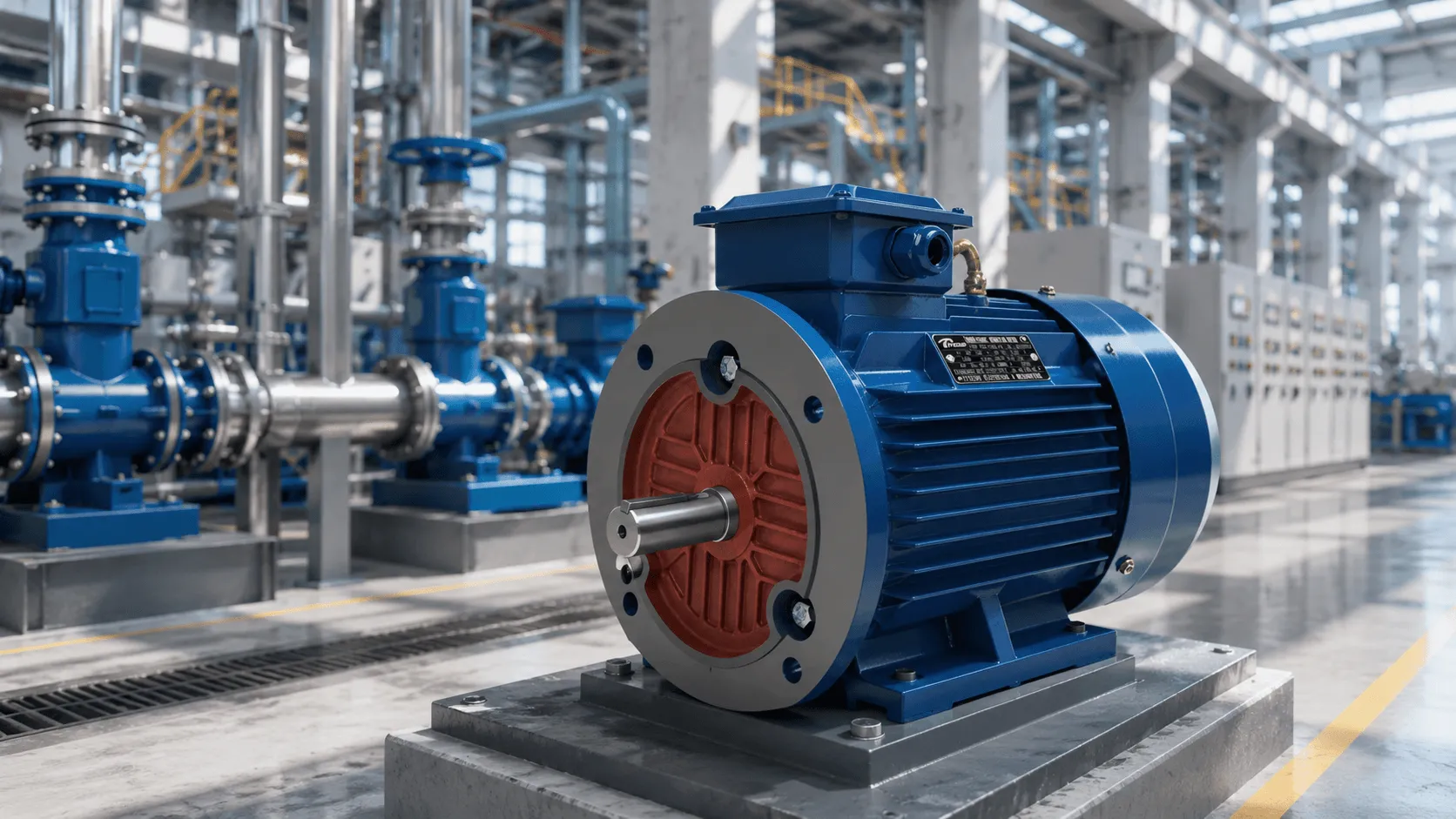
| Terminal Box | Aluminum or cast iron, 360° rotatable | Flexible cable entry, IP55 protection |
| Cooling Fan | Glass-reinforced polypropylene (PP+GF30) | High strength, low noise, corrosion resistant |
| Fan Cover | Steel with electrophoretic coating | Impact protection, corrosion resistance |
| Terminal Block | High-quality brass with nickel plating | Low contact resistance, oxidation resistance |
3.3 Model Nomenclature System
plain
YE2 - □□□ □ - □ - □
│      │   │   │   └── Mounting code (B3/B5/B35/V1/etc.)
│      │   │   └────── Pole number (2/4/6/8)
│      │   └────────── Core length code (S/M/L/1/2)
│      └─────────────── Frame size (center height in mm)
└────────────────────── Series designation (Y + E2 = IE2 Efficiency)Example: YE2-132M-4-B3
- YE2: High-efficiency three-phase asynchronous motor (IE2 class)
- 132: Center height = 132 mm
- M: Medium frame length
- 4: 4-pole (1,500 r/min synchronous, ~1,440 r/min rated)
- B3: Foot-mounted, horizontal shaft
Example: YE2-160L-2-B35
- 160: Center height = 160 mm
- L: Long frame
- 2: 2-pole (3,000 r/min synchronous, ~2,900 r/min rated)
- B35: Foot-mounted with flange (large flange)
4. Technical Specifications & Performance Data
4.1 Standard Operating Conditions
表格
| Parameter | Specification |
|---|---|
| Rated Voltage | 380 V (3-phase), 50 Hz (standard); 220–660 V on request |
| Voltage Tolerance | ±5% of rated voltage (continuous operation) |
| Frequency | 50 Hz (standard); 60 Hz available |
| Power Range | 0.12 kW – 315 kW (standard series); up to 500 kW (extended) |
| Frame Size | H63 – H355 (IEC 60072) |
| Pole Number | 2, 4, 6, 8 poles |
| Protection Class | IP55 (standard); IP54 / IP56 / IP65 (optional) |
| Insulation Class | Class F (155°C) with Class B (130°C) temperature rise |
| Cooling Method | IC411 (Totally Enclosed Fan-Cooled, TEFC) |
| Duty Type | S1 (Continuous Duty); S3, S4, S5, S6 on request |
| Connection | Star (Y) for ≤ 3 kW; Delta (Δ) for ≥ 4 kW |
| Ambient Temperature | -20°C to +40°C (standard); -40°C to +60°C (special) |
| Altitude | ≤ 1,000 m (standard); > 1,000 m requires derating |
| Relative Humidity | ≤ 90% |
| Mounting | B3, B5, B14, B34, B35, V1, V3, V5, V6, V15, V18 |
4.2 Efficiency Data — 2-Pole (3,000 r/min synchronous), 380V, 50Hz
表格
| Model | Power (kW) | Speed (r/min) | Efficiency (%) | Power Factor | Current (A) | Tst/Tn | Tmax/Tn |
|---|---|---|---|---|---|---|---|
| YE2-801-2 | 0.75 | 2,825 | 77.4 | 0.83 | 1.75 | 2.2 | 2.3 |
| YE2-802-2 | 1.1 | 2,825 | 79.6 | 0.84 | 2.42 | 2.2 | 2.3 |
| YE2-90S-2 | 1.5 | 2,840 | 81.3 | 0.84 | 3.22 | 2.2 | 2.3 |
| YE2-90L-2 | 2.2 | 2,840 | 83.2 | 0.85 | 4.50 | 2.2 | 2.3 |
| YE2-100L-2 | 3.0 | 2,880 | 84.6 | 0.87 | 5.92 | 2.2 | 2.3 |
| YE2-112M-2 | 4.0 | 2,890 | 85.8 | 0.88 | 7.62 | 2.2 | 2.3 |
| YE2-132S1-2 | 5.5 | 2,900 | 87.0 | 0.88 | 10.2 | 2.0 | 2.3 |
| YE2-132S2-2 | 7.5 | 2,900 | 88.1 | 0.89 | 13.5 | 2.0 | 2.3 |
| YE2-160M1-2 | 11 | 2,930 | 89.4 | 0.89 | 19.3 | 2.0 | 2.3 |
| YE2-160M2-2 | 15 | 2,930 | 90.3 | 0.89 | 25.8 | 2.0 | 2.2 |
| YE2-160L-2 | 18.5 | 2,930 | 90.9 | 0.90 | 31.2 | 2.0 | 2.2 |
| YE2-180M-2 | 22 | 2,940 | 91.3 | 0.90 | 36.8 | 2.0 | 2.2 |
| YE2-200L1-2 | 30 | 2,950 | 92.0 | 0.90 | 49.5 | 2.0 | 2.2 |
| YE2-200L2-2 | 37 | 2,950 | 92.5 | 0.90 | 60.5 | 2.0 | 2.2 |
| YE2-225M-2 | 45 | 2,970 | 92.9 | 0.90 | 73.0 | 2.0 | 2.2 |
| YE2-250M-2 | 55 | 2,970 | 93.2 | 0.90 | 88.5 | 2.0 | 2.2 |
| YE2-280S-2 | 75 | 2,980 | 93.8 | 0.91 | 118.0 | 2.0 | 2.2 |
| YE2-280M-2 | 90 | 2,980 | 94.1 | 0.91 | 140.0 | 2.0 | 2.2 |
| YE2-315S-2 | 110 | 2,980 | 94.3 | 0.91 | 170.0 | 2.0 | 2.2 |
| YE2-315M-2 | 132 | 2,980 | 94.6 | 0.91 | 203.0 | 2.0 | 2.2 |
| YE2-315L1-2 | 160 | 2,980 | 94.8 | 0.92 | 243.0 | 2.0 | 2.2 |
| YE2-315L-2 | 200 | 2,980 | 95.0 | 0.92 | 302.0 | 2.0 | 2.2 |
4.3 Efficiency Data — 4-Pole (1,500 r/min synchronous), 380V, 50Hz
表格
| Model | Power (kW) | Speed (r/min) | Efficiency (%) | Power Factor | Current (A) | Tst/Tn | Tmax/Tn |
|---|---|---|---|---|---|---|---|
| YE2-801-4 | 0.55 | 1,405 | 71.0 | 0.75 | 1.50 | 2.4 | 2.3 |
| YE2-802-4 | 0.75 | 1,405 | 73.0 | 0.76 | 1.92 | 2.3 | 2.3 |
| YE2-90S-4 | 1.1 | 1,445 | 76.2 | 0.77 | 2.60 | 2.3 | 2.3 |
| YE2-90L-4 | 1.5 | 1,445 | 78.5 | 0.79 | 3.36 | 2.3 | 2.3 |
| YE2-100L1-4 | 2.2 | 1,440 | 81.0 | 0.81 | 4.65 | 2.3 | 2.3 |
| YE2-100L2-4 | 3.0 | 1,440 | 82.6 | 0.82 | 6.10 | 2.3 | 2.3 |
| YE2-112M-4 | 4.0 | 1,440 | 84.2 | 0.82 | 7.90 | 2.3 | 2.3 |
| YE2-132S-4 | 5.5 | 1,440 | 85.7 | 0.83 | 10.6 | 2.2 | 2.3 |
| YE2-132M-4 | 7.5 | 1,440 | 87.0 | 0.84 | 14.0 | 2.2 | 2.3 |
| YE2-160M-4 | 11 | 1,450 | 88.4 | 0.85 | 20.0 | 2.2 | 2.3 |
| YE2-160L-4 | 15 | 1,450 | 89.4 | 0.86 | 26.5 | 2.2 | 2.3 |
| YE2-180M-4 | 18.5 | 1,455 | 90.0 | 0.86 | 32.5 | 2.0 | 2.3 |
| YE2-180L-4 | 22 | 1,455 | 90.5 | 0.86 | 38.5 | 2.0 | 2.2 |
| YE2-200L-4 | 30 | 1,460 | 91.4 | 0.86 | 51.5 | 2.0 | 2.2 |
| YE2-225S-4 | 37 | 1,460 | 92.0 | 0.87 | 62.0 | 2.0 | 2.2 |
| YE2-225M-4 | 45 | 1,460 | 92.5 | 0.87 | 74.5 | 2.0 | 2.2 |
| YE2-250M-4 | 55 | 1,465 | 93.0 | 0.87 | 90.0 | 2.0 | 2.2 |
| YE2-280S-4 | 75 | 1,470 | 93.6 | 0.88 | 120.0 | 2.0 | 2.2 |
| YE2-280M-4 | 90 | 1,470 | 93.9 | 0.88 | 143.0 | 2.0 | 2.2 |
| YE2-315S-4 | 110 | 1,470 | 94.2 | 0.88 | 173.0 | 2.0 | 2.2 |
| YE2-315M-4 | 132 | 1,470 | 94.5 | 0.88 | 206.0 | 2.0 | 2.2 |
| YE2-315L1-4 | 160 | 1,470 | 94.7 | 0.89 | 248.0 | 2.0 | 2.2 |
| YE2-315L2-4 | 200 | 1,470 | 94.9 | 0.89 | 308.0 | 2.0 | 2.2 |
| YE2-315L-4 | 250 | 1,470 | 95.1 | 0.89 | 382.0 | 2.0 | 2.2 |
4.4 Efficiency Data — 6-Pole (1,000 r/min synchronous), 380V, 50Hz
表格
| Model | Power (kW) | Speed (r/min) | Efficiency (%) | Power Factor | Current (A) | Tst/Tn | Tmax/Tn |
|---|---|---|---|---|---|---|---|
| YE2-90S-6 | 0.75 | 910 | 75.9 | 0.71 | 2.10 | 2.0 | 2.1 |
| YE2-90L-6 | 1.1 | 910 | 78.1 | 0.73 | 2.89 | 2.0 | 2.1 |
| YE2-100L-6 | 1.5 | 940 | 79.8 | 0.75 | 3.80 | 2.0 | 2.1 |
| YE2-112M-6 | 2.2 | 960 | 81.8 | 0.76 | 5.30 | 2.0 | 2.1 |
| YE2-132S-6 | 3.0 | 960 | 83.3 | 0.76 | 7.00 | 2.0 | 2.1 |
| YE2-132M1-6 | 4.0 | 960 | 84.6 | 0.76 | 9.20 | 2.0 | 2.1 |
| YE2-132M2-6 | 5.5 | 960 | 86.0 | 0.77 | 12.3 | 2.0 | 2.1 |
| YE2-160M-6 | 7.5 | 970 | 87.2 | 0.77 | 16.4 | 2.0 | 2.1 |
| YE2-160L-6 | 11 | 970 | 88.4 | 0.78 | 23.5 | 2.0 | 2.1 |
| YE2-180L-6 | 15 | 970 | 89.4 | 0.81 | 30.0 | 2.0 | 2.1 |
| YE2-200L1-6 | 18.5 | 980 | 90.2 | 0.81 | 36.5 | 2.0 | 2.1 |
| YE2-200L2-6 | 22 | 980 | 90.6 | 0.83 | 42.5 | 2.0 | 2.1 |
| YE2-225M-6 | 30 | 980 | 91.4 | 0.84 | 56.5 | 2.0 | 2.1 |
| YE2-250M-6 | 37 | 985 | 92.0 | 0.85 | 68.5 | 2.0 | 2.1 |
| YE2-280S-6 | 45 | 985 | 92.5 | 0.86 | 82.0 | 2.0 | 2.1 |
| YE2-280M-6 | 55 | 985 | 93.0 | 0.86 | 99.0 | 2.0 | 2.1 |
| YE2-315S-6 | 75 | 990 | 93.6 | 0.86 | 134.0 | 2.0 | 2.1 |
| YE2-315M-6 | 90 | 990 | 93.9 | 0.86 | 160.0 | 2.0 | 2.1 |
| YE2-315L1-6 | 110 | 990 | 94.2 | 0.86 | 195.0 | 2.0 | 2.1 |
| YE2-315L2-6 | 132 | 990 | 94.4 | 0.87 | 232.0 | 2.0 | 2.1 |
| YE2-315L-6 | 160 | 990 | 94.6 | 0.87 | 280.0 | 2.0 | 2.1 |
4.5 8-Pole (750 r/min synchronous), 380V, 50Hz
表格
| Model | Power (kW) | Speed (r/min) | Efficiency (%) | Power Factor | Current (A) | Tst/Tn | Tmax/Tn |
|---|---|---|---|---|---|---|---|
| YE2-132S-8 | 2.2 | 710 | 80.0 | 0.68 | 5.80 | 1.8 | 2.0 |
| YE2-132M-8 | 3.0 | 710 | 81.5 | 0.70 | 7.50 | 1.8 | 2.0 |
| YE2-160M1-8 | 4.0 | 720 | 82.9 | 0.72 | 9.70 | 1.9 | 2.0 |
| YE2-160M2-8 | 5.5 | 720 | 84.3 | 0.74 | 12.8 | 1.9 | 2.0 |
| YE2-160L-8 | 7.5 | 720 | 85.6 | 0.75 | 17.0 | 1.9 | 2.0 |
| YE2-180L-8 | 11 | 730 | 87.0 | 0.76 | 24.0 | 1.9 | 2.0 |
| YE2-200L-8 | 15 | 730 | 88.0 | 0.78 | 31.5 | 1.9 | 2.0 |
| YE2-225S-8 | 18.5 | 735 | 88.8 | 0.79 | 38.0 | 1.9 | 2.0 |
| YE2-225M-8 | 22 | 735 | 89.3 | 0.80 | 44.5 | 1.9 | 2.0 |
| YE2-250M-8 | 30 | 735 | 90.3 | 0.81 | 59.5 | 1.9 | 2.0 |
| YE2-280S-8 | 37 | 740 | 90.8 | 0.82 | 72.0 | 1.9 | 2.0 |
| YE2-280M-8 | 45 | 740 | 91.3 | 0.83 | 86.5 | 1.9 | 2.0 |
| YE2-315S-8 | 55 | 740 | 91.8 | 0.83 | 105.0 | 1.9 | 2.0 |
| YE2-315M-8 | 75 | 740 | 92.4 | 0.84 | 141.0 | 1.9 | 2.0 |
| YE2-315L1-8 | 90 | 740 | 92.8 | 0.84 | 168.0 | 1.9 | 2.0 |
| YE2-315L2-8 | 110 | 740 | 93.1 | 0.85 | 203.0 | 1.9 | 2.0 |
| YE2-315L-8 | 132 | 740 | 93.4 | 0.85 | 242.0 | 1.9 | 2.0 |
5. Efficiency Analysis & Loss Breakdown
5.1 Motor Loss Components
The total losses in an induction motor comprise five principal components:
Ploss=Pstator_cu+Protor_cu+Piron+Pfriction_windage+Pstray
Where:
- Pstator_cu = Stator copper losses (I2R )
- Protor_cu = Rotor copper (aluminum) losses
- Piron = Core losses (hysteresis + eddy current)
- Pfriction_windage = Mechanical losses
- Pstray = Stray load losses
Typical Loss Distribution — YE2-160M-4 (11 kW, IE2):
表格
| Loss Component | IE1 (Baseline) | IE2 (YE2) | IE3 (YE3) | Reduction Strategy |
|---|---|---|---|---|
| Stator copper loss | 32% | 28% | 24% | Increased copper cross-section; optimized slot design |
| Rotor aluminum loss | 18% | 16% | 14% | Optimized rotor slot geometry; higher conductivity alloy |
| Core (iron) loss | 28% | 25% | 22% | Thinner laminations (0.5→0.35 mm); higher grade silicon steel |
| Friction & windage | 12% | 12% | 12% | Optimized fan design; reduced bearing friction |
| Stray load loss | 10% | 9% | 8% | Improved winding distribution; reduced harmonic content |
| Total losses | 100% | 90% | 80% | — |
5.2 Efficiency Improvement: YE2 vs. IE1 (Y Series)
表格
| Power (kW) | IE1 Efficiency (%) | YE2 Efficiency (%) | Absolute Improvement | Relative Loss Reduction | Annual Savings @ 6,000 h ($0.12/kWh) |
|---|---|---|---|---|---|
| 0.75 | 72.1 | 77.4 | +5.3% | 19.0% | $42 |
| 1.5 | 77.4 | 81.3 | +3.9% | 17.1% | $52 |
| 3.0 | 81.4 | 84.6 | +3.2% | 17.3% | $82 |
| 5.5 | 84.1 | 87.0 | +2.9% | 18.3% | $132 |
| 11 | 87.6 | 89.4 | +1.8% | 14.5% | $148 |
| 18.5 | 89.2 | 90.0 | +0.8% | 7.4% | $88 |
| 30 | 90.7 | 91.4 | +0.7% | 7.5% | $140 |
| 55 | 92.0 | 93.0 | +1.0% | 12.5% | $360 |
| 90 | 93.0 | 93.9 | +0.9% | 12.9% | $524 |
| 160 | 93.9 | 94.7 | +0.8% | 13.2% | $818 |
Key Observation: The absolute efficiency improvement is most pronounced at lower power ratings (where baseline efficiency is lowest), while the economic impact is greatest at higher power ratings (where energy consumption is highest).
5.3 IE2 vs. IE3: Upgrade Economics
表格
| Power (kW) | IE2 Efficiency (%) | IE3 Efficiency (%) | Efficiency Gain | Incremental Cost (%) | Simple Payback (years) @ 6,000 h/year |
|---|---|---|---|---|---|
| 1.5 | 81.3 | 85.5 | +4.2% | 15–20% | 1.8–2.4 |
| 5.5 | 87.0 | 89.2 | +2.2% | 12–18% | 2.5–3.8 |
| 11 | 89.4 | 91.2 | +1.8% | 10–15% | 3.0–4.5 |
| 22 | 90.5 | 92.1 | +1.6% | 8–12% | 3.5–5.2 |
| 45 | 92.5 | 93.6 | +1.1% | 6–10% | 4.5–7.5 |
| 90 | 93.9 | 94.8 | +0.9% | 5–8% | 5.5–8.8 |
| 160 | 94.7 | 95.4 | +0.7% | 4–7% | 7.0–12.3 |
Conclusion: The economic case for upgrading from IE2 to IE3 is strongest at low-to-medium power ratings (≤ 22 kW) with high operating hours. At very high power ratings, the incremental efficiency gain is small and payback periods extend significantly.
6. Dimensional Data & Mounting Configurations
6.1 Foot-Mounted (B3) Dimensions — Selected Frame Sizes
表格
| Frame | A | B | C | D | E | F | G | H | K | L |
|---|---|---|---|---|---|---|---|---|---|---|
| 80 | 125 | 100 | 50 | 19 | 40 | 6 | 15.5 | 80 | 10 | 285 |
| 90S | 140 | 100 | 56 | 24 | 50 | 8 | 20 | 90 | 10 | 320 |
| 90L | 140 | 125 | 56 | 24 | 50 | 8 | 20 | 90 | 10 | 345 |
| 100L | 160 | 140 | 63 | 28 | 60 | 8 | 24 | 100 | 12 | 380 |
| 112M | 190 | 140 | 70 | 28 | 60 | 8 | 24 | 112 | 12 | 400 |
| 132S | 216 | 140 | 89 | 38 | 80 | 10 | 33 | 132 | 12 | 470 |
| 132M | 216 | 178 | 89 | 38 | 80 | 10 | 33 | 132 | 12 | 508 |
| 160M | 254 | 210 | 108 | 42 | 110 | 12 | 37 | 160 | 14.5 | 600 |
| 160L | 254 | 254 | 108 | 42 | 110 | 12 | 37 | 160 | 14.5 | 644 |
| 180M | 279 | 241 | 121 | 48 | 110 | 14 | 42.5 | 180 | 14.5 | 690 |
| 180L | 279 | 279 | 121 | 48 | 110 | 14 | 42.5 | 180 | 14.5 | 728 |
| 200L | 318 | 305 | 133 | 55 | 110 | 16 | 49 | 200 | 18.5 | 780 |
| 225S | 356 | 286 | 149 | 60 | 140 | 18 | 53 | 225 | 18.5 | 820 |
| 225M | 356 | 311 | 149 | 60 | 140 | 18 | 53 | 225 | 18.5 | 845 |
| 250M | 406 | 349 | 168 | 65 | 140 | 18 | 58 | 250 | 24 | 935 |
| 280S | 457 | 368 | 190 | 75 | 140 | 20 | 67.5 | 280 | 24 | 1,020 |
| 280M | 457 | 419 | 190 | 75 | 140 | 20 | 67.5 | 280 | 24 | 1,071 |
| 315S | 508 | 406 | 216 | 80 | 170 | 22 | 71 | 315 | 28 | 1,150 |
| 315M | 508 | 457 | 216 | 80 | 170 | 22 | 71 | 315 | 28 | 1,201 |
| 315L | 508 | 508 | 216 | 80 | 170 | 22 | 71 | 315 | 28 | 1,252 |
All dimensions in millimeters (mm). Dimensional tolerances per IEC 60072.
6.2 Flange-Mounted (B5) Dimensions
表格
| Frame | D | E | F | G | M | N | P | S | T | L |
|---|---|---|---|---|---|---|---|---|---|---|
| 80 | 19 | 40 | 6 | 15.5 | 165 | 130 | 200 | 12 | 3.5 | 285 |
| 90S/L | 24 | 50 | 8 | 20 | 165 | 130 | 200 | 12 | 3.5 | 320–345 |
| 100L | 28 | 60 | 8 | 24 | 215 | 180 | 250 | 14.5 | 4 | 380 |
| 112M | 28 | 60 | 8 | 24 | 215 | 180 | 250 | 14.5 | 4 | 400 |
| 132S/M | 38 | 80 | 10 | 33 | 265 | 230 | 300 | 14.5 | 4 | 470–508 |
| 160M/L | 42 | 110 | 12 | 37 | 300 | 250 | 350 | 18.5 | 5 | 600–644 |
| 180M/L | 48 | 110 | 14 | 42.5 | 300 | 250 | 350 | 18.5 | 5 | 690–728 |
| 200L | 55 | 110 | 16 | 49 | 350 | 300 | 400 | 18.5 | 5 | 780 |
| 225S/M | 60 | 140 | 18 | 53 | 400 | 350 | 450 | 18.5 | 5 | 820–845 |
| 250M | 65 | 140 | 18 | 58 | 500 | 450 | 550 | 18.5 | 5 | 935 |
| 280S/M | 75 | 140 | 20 | 67.5 | 500 | 450 | 550 | 18.5 | 5 | 1,020–1,071 |
| 315S/M/L | 80 | 170 | 22 | 71 | 600 | 550 | 660 | 24 | 6 | 1,150–1,252 |
6.3 Mounting Configuration Availability
表格
| Code | Description | H63–H112 | H132–H160 | H180–H225 | H250–H355 |
|---|---|---|---|---|---|
| B3 | Foot-mounted, horizontal shaft | ✓ | ✓ | ✓ | ✓ |
| B5 | Flange-mounted, large flange (FF) | ✓ | ✓ | ✓ | ✓ |
| B14 | Flange-mounted, small flange (FT) | ✓ | ✓ | — | — |
| B35 | Foot + large flange | ✓ | ✓ | ✓ | ✓ |
| B34 | Foot + small flange | ✓ | ✓ | — | — |
| V1 | Vertical, shaft downward | ✓ | ✓ | ✓ | ✓ |
| V3 | Vertical, shaft upward | ✓ | ✓ | — | — |
| V5 | Wall-mounted, shaft left | ✓ | ✓ | — | — |
| V6 | Wall-mounted, shaft right | ✓ | ✓ | — | — |
| V15 | Vertical + flange, shaft down | ✓ | ✓ | — | — |
| V18 | Vertical + small flange | ✓ | — | — | — |
7. Torque Characteristics & Starting Performance
7.1 Torque-Speed Relationship
The electromagnetic torque of an induction motor is given by:
T=2πf3p⋅(R1+sR2′)2+(X1+X2′)2V12⋅sR2′
Where:
- p = Pole pairs
- f = Supply frequency (Hz)
- V1 = Stator phase voltage (V)
- R1 , X1 = Stator resistance and reactance
- R2′ , X2′ = Rotor resistance and reactance (referred to stator)
- s = Slip
Slip at Rated Load:
sn=nsns−nr×100%
表格
| Pole Number | Synchronous Speed (r/min) | Typical Rated Speed (r/min) | Typical Slip (%) |
|---|---|---|---|
| 2 | 3,000 | 2,890–2,980 | 0.7–3.7 |
| 4 | 1,500 | 1,440–1,470 | 2.0–4.0 |
| 6 | 1,000 | 960–990 | 1.0–4.0 |
| 8 | 750 | 710–740 | 1.3–5.3 |
7.2 Starting Performance Parameters
表格
| Parameter | Symbol | Typical Value | Significance |
|---|---|---|---|
| Locked-rotor torque ratio | Tst/Tn | 1.8–2.4 | Ability to start under load |
| Pull-up torque ratio | Tpu/Tn | 1.6–2.2 | Ability to accelerate through speed range |
| Breakdown torque ratio | Tmax/Tn | 2.0–2.5 | Overload capability before stall |
| Locked-rotor current ratio | Ist/In | 6.0–8.0 | Starting current impact on grid |
| Starting time | tstart | 1–10 s | Function of load inertia and torque |
Starting Torque Requirements by Load Type:
表格
| Load Type | Required Tst/Tn | YE2 Suitability | Starting Method |
|---|---|---|---|
| Centrifugal pump | 1.2–1.5 | Excellent | DOL up to 5.5 kW |
| Fan (low inertia) | 1.3–1.8 | Excellent | DOL up to 11 kW |
| Fan (high inertia) | 1.8–2.5 | Good | Star-delta or soft starter |
| Compressor (unloaded) | 1.5–2.0 | Excellent | DOL or star-delta |
| Compressor (loaded) | 2.0–2.5 | Good | Soft starter or DOL with clutch |
| Conveyor (empty) | 1.5–2.0 | Excellent | DOL |
| Conveyor (loaded) | 2.0–2.8 | Marginal | High-torque motor or soft starter |
| Mixer (liquid) | 1.2–1.8 | Excellent | DOL |
| Mixer (viscous) | 2.0–3.0 | Marginal | High-slip or VFD |
| Crane / Hoist | 2.5–3.5 | Poor | High-slip or specialized motor |
8. Application Engineering
8.1 Industry Application Matrix
表格
| Industry Sector | Typical Application | Preferred YE2 Spec | Duty Considerations |
|---|---|---|---|
| Water Supply & Treatment | Raw water pumps, booster pumps, filter feed | 4-pole, IP55, cast iron frame | Continuous duty; possible VFD |
| HVAC | Chilled water pumps, hot water circulation, cooling towers | 4-pole or 6-pole, IP55, aluminum frame | Continuous duty; variable load |
| Irrigation | Surface pumps, booster stations, center pivot | 2-pole or 4-pole, IP55, cast iron | Seasonal; outdoor installation |
| Food & Beverage | Mixers, conveyors, packaging machinery | 4-pole, IP55 or IP65, aluminum | Washdown duty; food-grade options |
| Textile | Spinning frames, looms, winding machines | 4-pole, IP55, low vibration | High-speed precision; low noise |
| Printing | Press drives, folder units, conveyor systems | 4-pole, IP55, B5 mounting | Continuous duty; speed stability |
| Machine Tools | Lathe spindles, milling heads, grinding machines | 2-pole or 4-pole, B3 or B5 | High starting torque; precision |
| Material Handling | Belt conveyors, bucket elevators, screw conveyors | 4-pole or 6-pole, high torque | Intermittent duty; high inertia |
| Mining & Quarrying | Crushers, screens, conveyors, pumps | 4-pole, IP55, cast iron, C3 bearings | Dust; vibration; heavy duty |
| Cement | Kiln drives, mill drives, fan drives | 4-pole or 6-pole, IP55, cast iron | High ambient; dust; continuous |
| Oil & Gas | Pump jacks, transfer pumps, compressor drives | 4-pole, IP55 or IP56, cast iron | Hazardous area options; outdoor |
| Marine | Bilge pumps, fire pumps, HVAC fans | 4-pole, IP56, cast iron or aluminum | Vibration; inclination; corrosion |
| Agriculture | Grain dryers, feed mills, irrigation pumps | 4-pole, IP55, aluminum or cast iron | Seasonal; outdoor; dust |
| General Industry | Compressors, fans, pumps, mixers | 2/4/6-pole per application | Standard configuration |
8.2 Pump Application Power Sizing
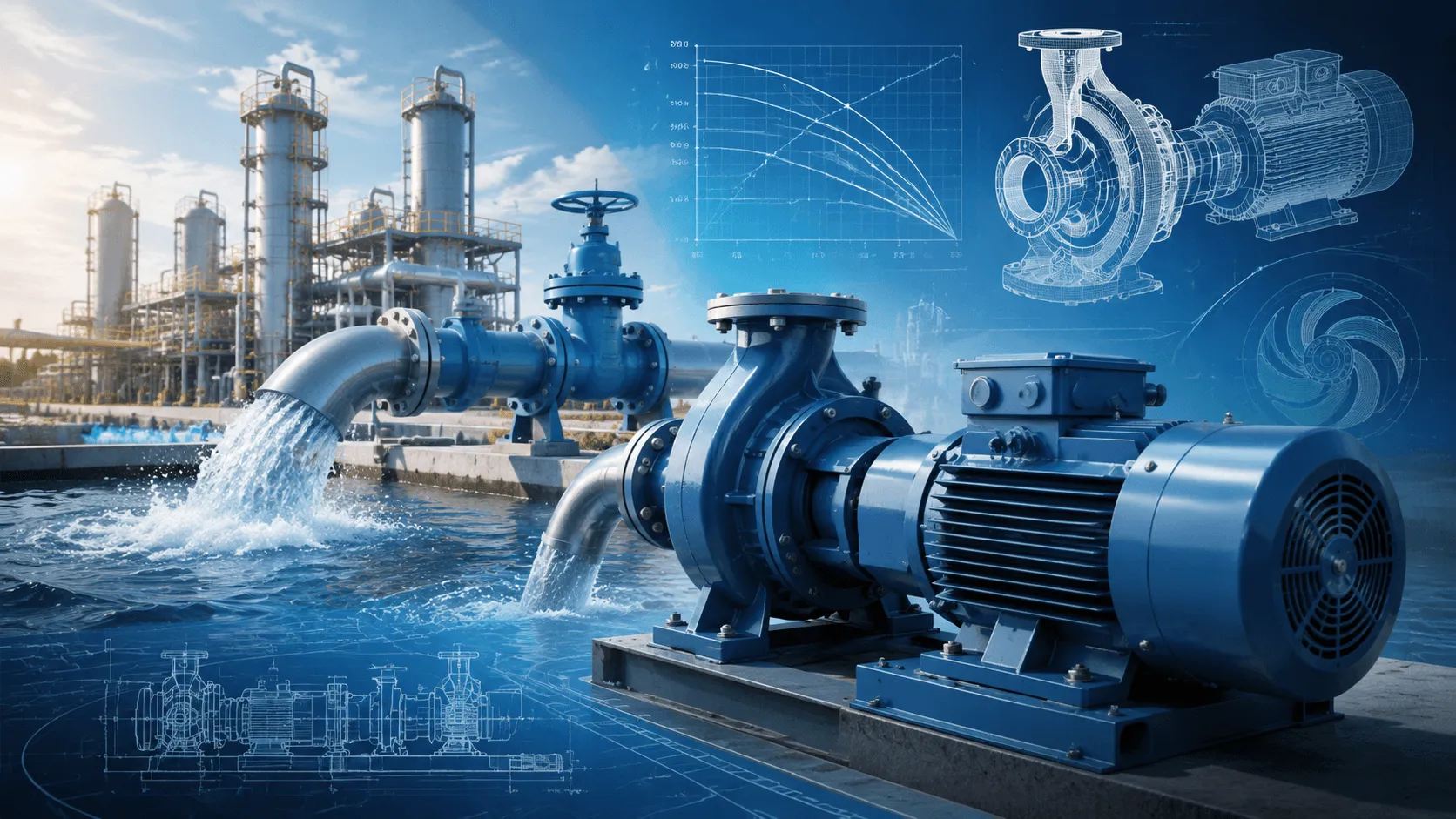
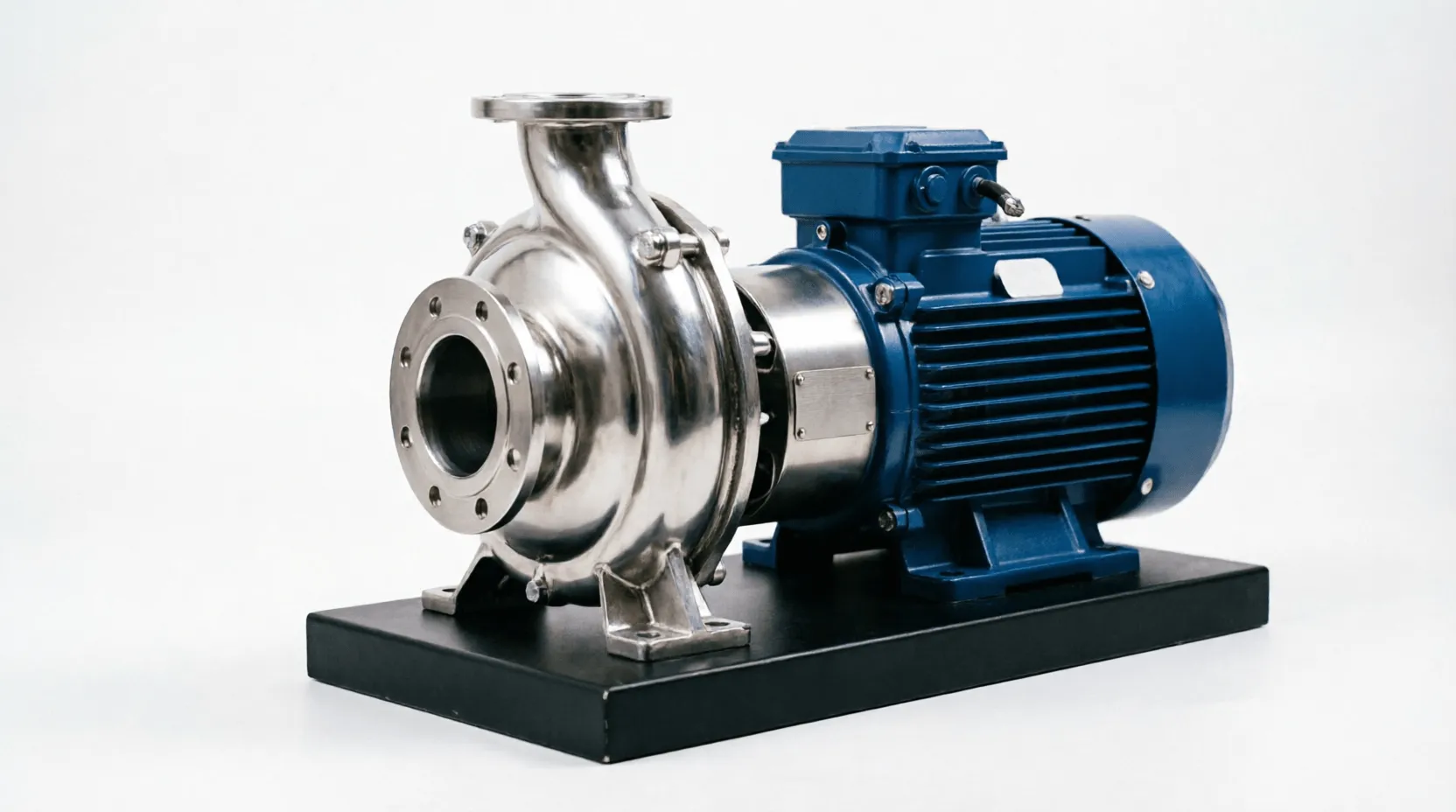
For centrifugal pump applications (the most common YE2 application):
Hydraulic Power:
Phydraulic=367Q×H [kW]
Required Motor Power:
Pmotor=367×ηp×ηmQ×H×SF
Where:
- Q = Flow rate (m³/h)
- H = Total dynamic head (m)
- ηp = Pump efficiency (typically 0.60–0.85)
- ηm = Motor efficiency (from YE2 tables)
- SF = Service factor (1.10–1.15 for pumps)
Sizing Example:
Application: HVAC chilled water circulation pump
- Q = 80 m³/h, H = 32 m
- Pump efficiency = 75%
- YE2-132S-4 selected (5.5 kW, 85.7% efficiency)
Pmotor=367×0.75×0.85780×32×1.10=235.62,560×1.10=11.94 kW
Selected: YE2-160M-4 (11 kW) — slightly below calculated but within acceptable margin for pump service factor. Next size up (15 kW) would operate at part load with reduced efficiency.
8.3 Variable Frequency Drive (VFD) Compatibility
表格
| Parameter | YE2 with VFD | Notes |
|---|---|---|
| Minimum speed | 25–30 Hz (50%–60% of rated) | Below this, motor cooling may be insufficient |
| Maximum speed | 50–55 Hz (100%–110% of rated) | Do not exceed without manufacturer approval |
| Recommended VFD type | Scalar (V/Hz) or Sensorless Vector | Vector control preferred for torque-critical applications |
| Switching frequency | 2–4 kHz | Lower reduces motor heating; higher reduces noise |
| Cable length | < 50 m without filter; < 150 m with dv/dt filter | Long cables cause voltage reflection |
| Bearing protection | Recommended for > 30 kW or cable > 50 m | Shaft grounding brush or insulated bearing |
| Derating | 5–10% below 30 Hz | Reduced self-cooling at low speed |
9. Comparative Analysis: YE2 vs. Alternative Motor Series
表格
| Evaluation Criteria | YE2 (IE2) | Y3/YE3 (IE3) | YX3/YE4 (IE4) | Y Series (IE1) |
|---|---|---|---|---|
| Efficiency class | IE2 (High) | IE3 (Premium) | IE4 (Super Premium) | IE1 (Standard) |
| Full-load efficiency (4-pole, 11 kW) | 88.4% | 91.2% | 92.5% | 87.6% |
| Purchase price index | 100 (baseline) | 110–120 | 130–150 | 85–90 |
| Operating cost (6,000 h/year, 11 kW) | $1,056/year | $1,024/year | $1,008/year | $1,120/year |
| Annual energy savings vs. IE1 | $64/year | $96/year | $112/year | — |
| Simple payback vs. IE1 | 2.3–3.1 years | 3.1–4.6 years | 4.5–6.7 years | — |
| China domestic market (post-2021) | Restricted | Fully compliant | Fully compliant | Phased out |
| Export market acceptance | Good | Excellent | Premium niche | Declining |
| Availability | Good (existing stock) | Excellent | Moderate (growing) | Limited |
| Spare parts interchangeability | Standard IEC | Standard IEC | Standard IEC | Standard IEC |
| Best application | Export markets; retrofit; cost-sensitive | New installations; high-run hours | Continuous duty; energy-critical | Non-regulated markets only |
10. Quality Assurance & Certifications
表格
| Certification | Standard | Scope | YE2 Status |
|---|---|---|---|
| CCC | GB standards | China Compulsory Product Certification | Certified (pre-2021) |
| CE Marking | EU Low Voltage Directive 2014/35/EU | European market access | Certified |
| ISO 9001 | ISO 9001:2015 | Quality management systems | Certified |
| IEC | IEC 60034 series | International electrotechnical standards | Compliant |
| EAC | TR CU 004/2011 | Eurasian Customs Union | Certified |
| CSA | CSA C390 | Canadian market (optional) | Available on request |
| UL | UL 1004 | North American market (optional) | Available on request |
| Energy Label (China) | CEL007 | China Energy Label | Grade 3 (pre-2021) |
11. Maintenance & Troubleshooting
11.1 Preventive Maintenance Schedule
表格
| Interval | Component | Action | Indicator of Required Service |
|---|---|---|---|
| Monthly | Bearing temperature | Record readings | Rising trend > 2°C/month |
| Monthly | Vibration | Measure and record | Increase > 10% from baseline |
| Quarterly | Terminal connections | Check tightness | Loose, discolored, or corroded terminals |
| Quarterly | Cooling fan | Inspect for damage | Cracks, imbalance, debris buildup |
| Semi-annually | Insulation resistance | Megger test (500V DC) | < 100 MΩ |
| Semi-annually | Bearings (greased) | Regrease per manufacturer | Extended grease life indicators |
| Annually | Coupling alignment | Laser or dial check | Deviation > 50% of installation spec |
| Annually | Winding resistance | Measure phase-to-phase | Imbalance > 2% |
| Every 2 years | Bearings (oil-lubricated) | Oil analysis | Contamination, viscosity change, metal particles |
| Every 3–5 years | Bearings | Replace (predictive) | Vibration, temperature trends |
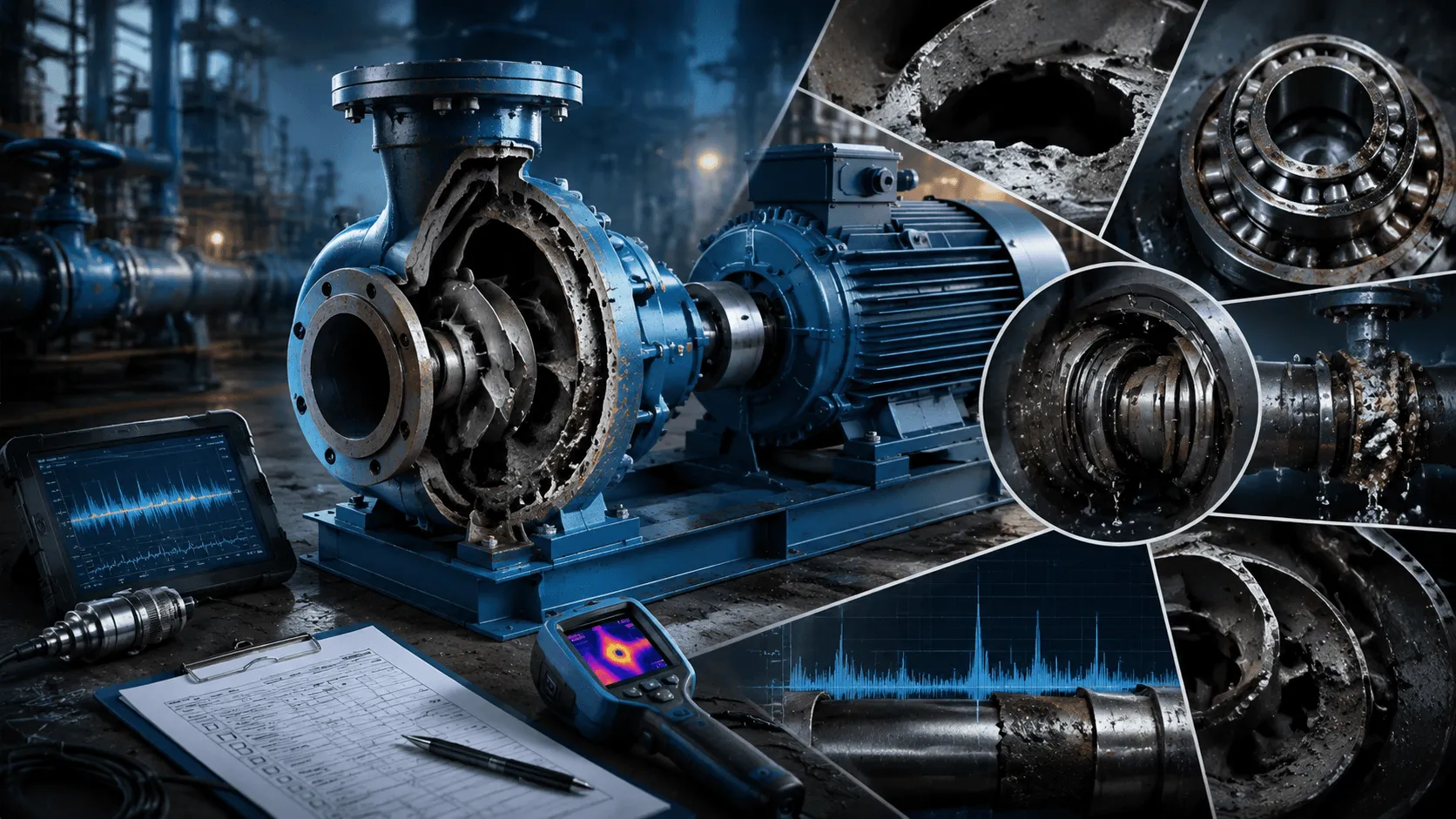
11.2 Common Faults & Remedies
表格
| Symptom | Probable Cause | Diagnostic Action | Corrective Measure |
|---|---|---|---|
| Motor overheating | Overload; low voltage; high ambient; blocked cooling; bearing failure | Check current vs. nameplate; measure voltage; measure ambient; inspect cooling; vibration analysis | Reduce load; improve supply; improve ventilation; clean cooling; replace bearings |
| Excessive vibration | Unbalance; misalignment; bearing wear; looseness; bent shaft | Balance check; alignment; vibration spectrum; bolt torque; runout check | Rebalance; realign; replace bearings; tighten; straighten shaft |
| High current | Overload; low voltage; single-phasing; mechanical binding | Compare to nameplate; measure voltage; check phase balance; rotate by hand | Reduce load; correct supply; repair electrical; free mechanical binding |
| Low torque / slow acceleration | Low voltage; wrong connection (star instead of delta); rotor defect | Measure voltage; verify connection; current signature analysis | Correct supply; correct wiring; repair rotor |
| Noise (electrical hum) | Single-phasing; loose laminations; inverter harmonics | Check phase balance; inspect core; measure THD | Repair supply; replace motor; install filter |
| Noise (mechanical) | Bearing failure; rubbing; loose fan; coupling wear | Vibration analysis; visual inspection | Replace bearing; correct clearance; tighten fan; replace coupling |
| Insulation failure | Moisture; overheating; contamination; voltage surge | Megger test; inspect windings; check for water ingress | Dry windings; correct cause; rewind or replace |
12. Conclusion
The YE2 series high-efficiency three-phase asynchronous motor occupies a significant position in the evolution of industrial motor efficiency. As the first Chinese motor series purpose-designed to meet IE2 / GB 18613-2012 Grade 3 efficiency requirements, the YE2 established the technical and commercial foundation for subsequent IE3 and IE4 developments.
For procurement professionals and system designers, the YE2 series offers:
- Proven efficiency: 20% lower losses than IE1 (Y series) motors, delivering measurable energy savings
- Global interchangeability: IEC standard dimensions ensure compatibility with existing installations and spare parts
- Regulatory flexibility: Acceptable for export markets and exempt applications where IE3 is not mandated
- Cost-effectiveness: Lower capital cost than IE3/IE4 alternatives, with reasonable payback periods for moderate-run applications
- Mature supply chain: Extensive manufacturing base and spare parts availability
However, the regulatory landscape has shifted decisively toward IE3 as the new baseline. For new installations in regulated markets (China domestic, EU, Brazil, Australia), YE3 (IE3) or higher should be specified. The YE2 series is best reserved for:
- Export markets where IE2 remains the accepted standard
- Replacement applications where upgrading to IE3 is not economically justified
- Exempt applications (integrated machines, submersible motors, special duty)
- Cost-sensitive projects with low operating hours where IE3 payback exceeds acceptable thresholds
By understanding the YE2 series’ capabilities, limitations, and regulatory context, engineers can make informed motor selection decisions that balance efficiency, cost, and compliance requirements.
All technical data conforms to IEC 60034-30-1 (IE2 efficiency class), GB 18613-2012 (Grade 3), and IEC 60034-2-1 testing methodology. For application-specific motor selection in regulated markets, verify current local requirements as efficiency mandates continue to evolve globally.
No comments yet