


1. Introduction
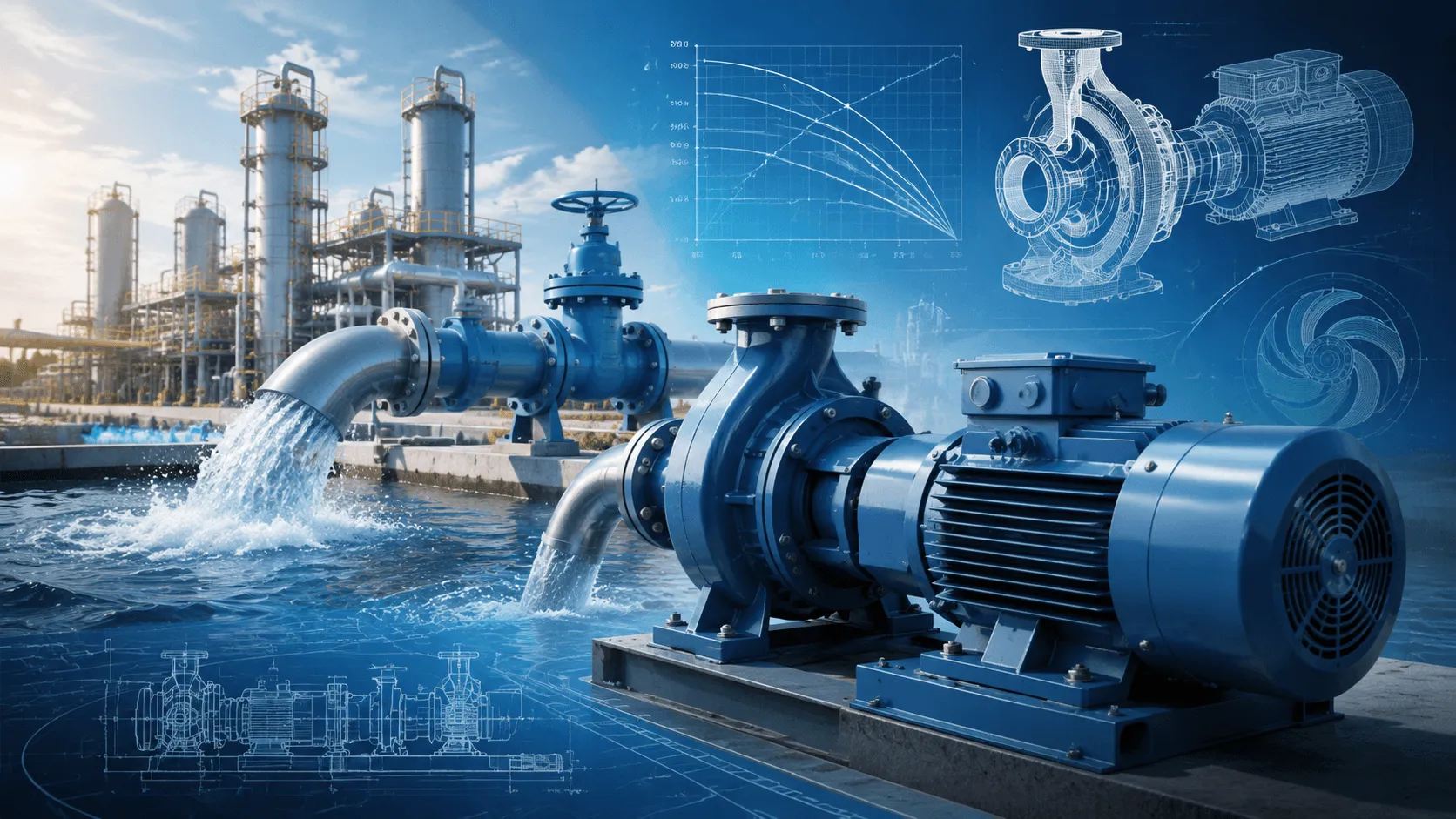
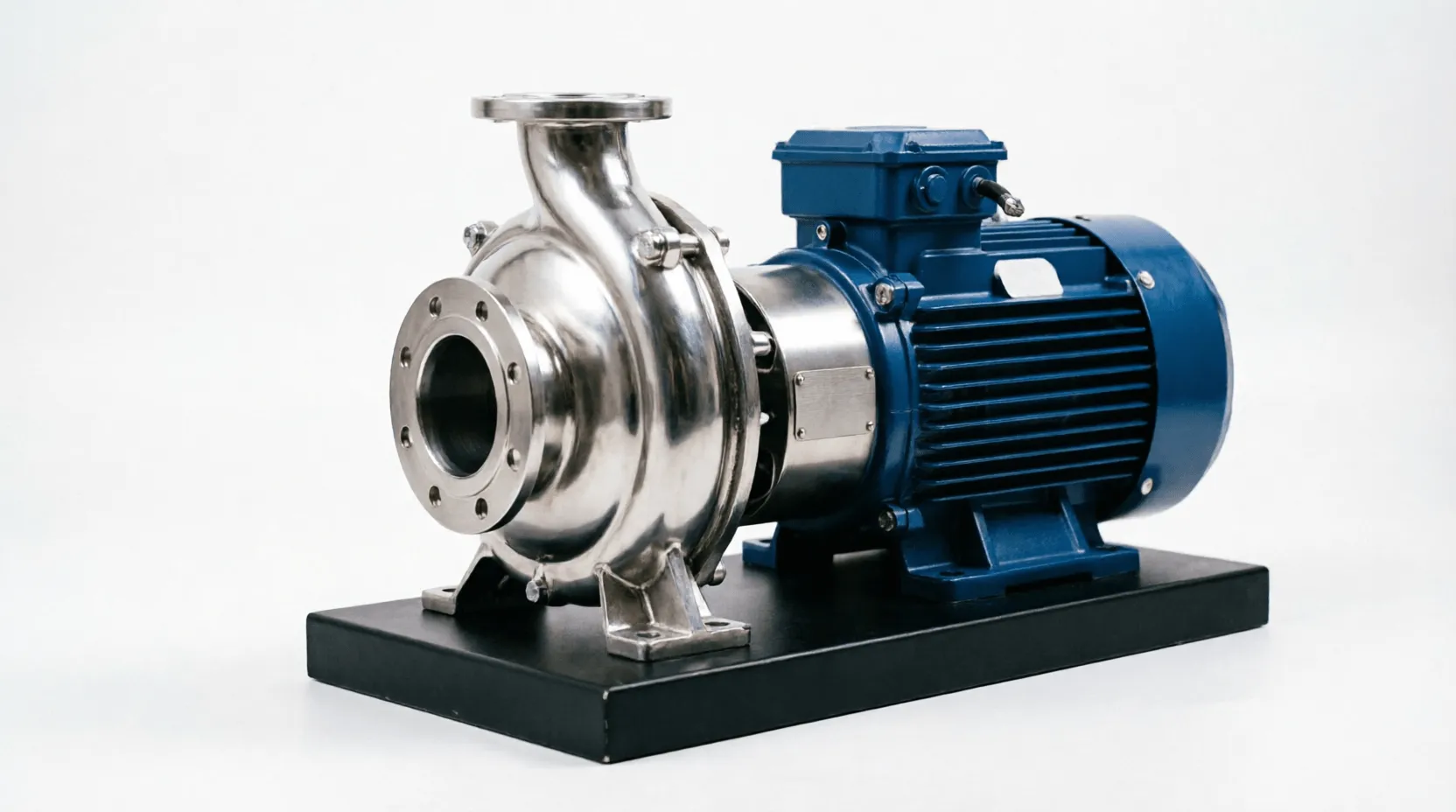
The L Series horizontal single-stage centrifugal pump represents one of the most widely adopted pump configurations in industrial, commercial, and municipal fluid handling applications worldwide. Designed in accordance with DIN 24255 / EN 733 international standards, the L Series combines robust construction, standardized dimensions, and versatile material options to deliver reliable performance across an extensive duty range.
Unlike specialized pump designs optimized for narrow application windows, the L Series excels as a general-purpose workhorse — capable of handling clean and slightly contaminated liquids across water supply, HVAC, irrigation, process cooling, and light industrial applications. Its back-pull-out design enables rapid maintenance without disturbing piping connections, while the standardized flange dimensions ensure seamless interchangeability with other DIN-compliant pump brands.
This guide provides a comprehensive technical reference for specifying, applying, and maintaining L Series pumps in real-world installations.
2. Design Standards & Construction Philosophy
2.1 Compliance Standards
表格
| Standard | Scope | Relevance to L Series |
|---|---|---|
| DIN 24255 | Dimensions and nominal ratings of end-suction centrifugal pumps | Defines mounting dimensions, flange locations, shaft heights |
| EN 733 | European standard for end-suction centrifugal pumps | Supersedes DIN 24255; performance and interface standardization |
| ISO 2858 | International standard for end-suction centrifugal pumps | Global interchangeability of main dimensions |
| ISO 5199 | Technical specifications for centrifugal pumps — Class II | Design, construction, and testing requirements |
| IEC 60034 | Rotating electrical machines | Motor specifications, efficiency classes, protection |
| DIN 2501 | Flange dimensions and drilling patterns | PN16 standard flange configuration |
2.2 Structural Design Features
表格
| Feature | Description | Engineering Benefit |
|---|---|---|
| Horizontal volute casing | Single-piece cast iron construction with integrated feet | Structural rigidity, vibration damping, simplified installation |
| Axial suction, radial discharge | Inline suction with upward-turning discharge | Compact footprint, easy piping layout |
| Back-pull-out design | Rotor assembly removable from drive end without pipe disturbance | Maintenance time reduced 60–80% vs. non-back-pull-out designs |
| Single-stage, single-flow impeller | Closed impeller standard; semi-open optional for solids | High efficiency with clean liquids; adaptability for light solids |
| Bearing bracket with supporting foot | Heavy-duty bearing housing with independent support | Isolates pipe strain from bearing alignment |
| Flexible coupling drive | Standard IEC motor connection via spacer coupling | Easy alignment; motor can be reused with replacement pump |
| Mechanical seal standard | Single mechanical seal (carbon/ceramic/Viton) | Leak-free operation; minimal maintenance |
| Optional gland packing | Soft packing for low-temperature water applications | Economical; easy field maintenance |
2.3 Model Nomenclature System
The L Series model code follows the DIN/EN standard nomenclature convention:
plain
L □□ - □□□ / □□□ - [A/B/C]
│  │    │     │      └── Impeller trim code (optional)
│  │    │     └───────── Nominal impeller diameter (mm)
│  │    └─────────────── Nominal discharge diameter (mm)
│  └───────────────────── Nominal suction diameter (mm)
└──────────────────────── Series designation (L = Horizontal Single-Stage)Example: L 65-40-250
- L: Horizontal single-stage centrifugal pump series
- 65: Nominal suction diameter = 65 mm (DN65)
- 40: Nominal discharge diameter = 40 mm (DN40)
- 250: Nominal impeller diameter = 250 mm
Example with trim: L 80-50-200A
- 80: Suction DN80
- 50: Discharge DN50
- 200: Base impeller diameter 200 mm
- A: First trim (typically 5% diameter reduction)
3. Technical Specifications & Performance Range
3.1 Standard Performance Parameters
表格
| Parameter | Specification Range | Notes |
|---|---|---|
| Flow Rate (Q) | 2 – 2,300 m³/h | Per EN 733 / extended sizes |
| Total Head (H) | 2 – 150 m | Single-stage limit |
| Speed (n) | 1,450 / 2,900 r/min (50 Hz); 1,750 / 3,500 r/min (60 Hz) | 4-pole / 2-pole motors |
| Operating Temperature | -15°C to +120°C (standard); up to +160°C (special) | Material and seal dependent |
| Maximum Working Pressure | 10 bar (standard); 16 bar (optional) | Casing thickness upgrade |
| NPSH Required | 2.0 – 8.0 m | Varies with speed and impeller design |
| Efficiency at BEP | 55% – 85% | Depends on specific speed and size |
| Motor Power Range | 0.37 kW – 250 kW | Standard IEC frame sizes |
| Motor Efficiency | IE3 (standard); IE4 / IE5 (optional) | Per IEC 60034-30-1 |
| Protection Class | IP55 (standard); IP56 / IP65 (optional) | TEFC construction |
| Insulation Class | Class F (155°C) standard; Class H (180°C) optional | |
| Installation | B3 (foot-mounted) standard; B35 (foot+flange) optional | IEC 60034-7 |
3.2 Performance Data — Standard EN 733 Sizes (50 Hz, 2,900 r/min)
表格
| Model | Suction × Discharge (mm) | Impeller Ø (mm) | Flow Range (m³/h) | Head Range (m) | Motor Power (kW) | Efficiency at BEP (%) |
|---|---|---|---|---|---|---|
| L 32-20-160 | 32 × 20 | 160 | 2 – 8 | 10 – 35 | 0.37 – 1.5 | 42 – 52 |
| L 32-20-200 | 32 × 20 | 200 | 3 – 12 | 20 – 55 | 0.75 – 3.0 | 48 – 58 |
| L 40-25-160 | 40 × 25 | 160 | 4 – 15 | 8 – 28 | 0.55 – 1.5 | 50 – 58 |
| L 40-25-200 | 40 × 25 | 200 | 6 – 20 | 18 – 50 | 1.1 – 4.0 | 55 – 65 |
| L 50-32-160 | 50 × 32 | 160 | 8 – 25 | 7 – 25 | 0.75 – 2.2 | 55 – 62 |
| L 50-32-200 | 50 × 32 | 200 | 12 – 35 | 15 – 45 | 1.5 – 5.5 | 60 – 68 |
| L 50-32-250 | 50 × 32 | 250 | 15 – 50 | 30 – 80 | 4.0 – 15 | 62 – 72 |
| L 65-40-160 | 65 × 40 | 160 | 15 – 40 | 6 – 20 | 1.1 – 3.0 | 58 – 65 |
| L 65-40-200 | 65 × 40 | 200 | 20 – 60 | 14 – 40 | 2.2 – 7.5 | 65 – 72 |
| L 65-40-250 | 65 × 40 | 250 | 25 – 80 | 28 – 75 | 5.5 – 22 | 68 – 76 |
| L 80-50-200 | 80 × 50 | 200 | 35 – 100 | 12 – 35 | 3.0 – 11 | 68 – 75 |
| L 80-50-250 | 80 × 50 | 250 | 45 – 130 | 25 – 65 | 7.5 – 30 | 72 – 78 |
| L 80-50-315 | 80 × 50 | 315 | 55 – 160 | 50 – 120 | 18.5 – 55 | 70 – 78 |
| L 100-65-200 | 100 × 65 | 200 | 60 – 150 | 10 – 30 | 4.0 – 15 | 70 – 76 |
| L 100-65-250 | 100 × 65 | 250 | 80 – 200 | 22 – 55 | 11 – 37 | 74 – 80 |
| L 100-65-315 | 100 × 65 | 315 | 100 – 250 | 45 – 100 | 22 – 75 | 75 – 82 |
| L 125-80-250 | 125 × 80 | 250 | 120 – 300 | 18 – 48 | 11 – 45 | 76 – 82 |
| L 125-80-315 | 125 × 80 | 315 | 150 – 380 | 40 – 90 | 30 – 90 | 78 – 84 |
| L 150-100-250 | 150 × 100 | 250 | 180 – 450 | 15 – 40 | 15 – 55 | 78 – 83 |
| L 150-100-315 | 150 × 100 | 315 | 220 – 550 | 35 – 80 | 37 – 110 | 80 – 85 |
| L 200-150-315 | 200 × 150 | 315 | 350 – 900 | 30 – 70 | 45 – 160 | 82 – 86 |
| L 200-150-400 | 200 × 150 | 400 | 450 – 1,200 | 55 – 120 | 90 – 250 | 80 – 85 |
3.3 Performance Data — 4-Pole (1,450 r/min) Configurations
表格
| Model | Flow Range (m³/h) | Head Range (m) | Motor Power (kW) | Efficiency at BEP (%) | Typical Application |
|---|---|---|---|---|---|
| L 50-32-250 | 8 – 25 | 8 – 20 | 1.1 – 4.0 | 55 – 65 | Low-pressure circulation |
| L 65-40-250 | 12 – 40 | 7 – 18 | 1.5 – 5.5 | 60 – 68 | HVAC circulation |
| L 80-50-250 | 22 – 65 | 6 – 16 | 2.2 – 7.5 | 65 – 72 | Cooling water |
| L 100-65-315 | 50 – 125 | 11 – 25 | 5.5 – 15 | 70 – 76 | Process water |
| L 125-80-315 | 75 – 190 | 10 – 22 | 7.5 – 22 | 72 – 78 | Irrigation |
| L 150-100-400 | 110 – 280 | 14 – 30 | 11 – 37 | 75 – 80 | Raw water intake |
| L 200-150-400 | 220 – 600 | 14 – 30 | 22 – 75 | 78 – 83 | Flood control |
| L 250-200-500 | 400 – 1,000 | 18 – 40 | 45 – 132 | 80 – 85 | Large water transfer |
4. Hydraulic Design & Performance Characteristics
4.1 Impeller Design Parameters
The L Series employs closed impellers as standard, with optional semi-open configurations for light solids handling.
Impeller Geometry Relationships:
The theoretical head developed by a centrifugal impeller:
Htheoretical=gu2vu2−u1vu1
For radial entry (vu1≈0 ):
Htheoretical=gu2vu2=gu2(u2−vm2cotβ2)
Where:
- u2=60πD2n = Peripheral velocity at impeller outlet (m/s)
- vm2=πD2b2ϵ2Q = Meridional velocity at outlet (m/s)
- β2 = Blade outlet angle (typically 20°–35°)
- ϵ2 = Vane blockage factor (typically 0.85–0.95)
Impeller Diameter and Performance Scaling:
For geometrically similar impellers at constant speed:
Q1Q2=(D1D2)3
H1H2=(D1D2)2
P1P2=(D1D2)5
Impeller Trim Limits:
表格
| Trim Code | Diameter Reduction | Head Reduction | Flow Reduction | Efficiency Impact |
|---|---|---|---|---|
| A (First trim) | 5% | 9.75% | 5% | -2% to -3% |
| B (Second trim) | 10% | 19% | 10% | -4% to -6% |
| C (Third trim) | 15% | 27.75% | 15% | -7% to -10% |
Maximum recommended trim: 20% of original diameter. Beyond this, efficiency degrades significantly and hydraulic stability deteriorates.
4.2 Specific Speed and Impeller Geometry
表格
| Specific Speed Ns (SI) | Impeller Type | Outlet Angle β2 | Width Ratio b2/D2 | L Series Application |
|---|---|---|---|---|
| 10 – 30 | Low-specific-speed radial | 25°–35° | 0.03 – 0.05 | High head, low flow (L 32-20, L 40-25) |
| 30 – 60 | Medium-specific-speed radial | 22°–30° | 0.04 – 0.07 | General purpose (L 50-32, L 65-40) |
| 60 – 100 | High-specific-speed radial / mixed | 18°–25° | 0.06 – 0.10 | Medium flow (L 80-50, L 100-65) |
| 100 – 150 | Mixed flow | 15°–20° | 0.08 – 0.15 | High flow, low head (L 125-80, L 150-100) |
| > 150 | Axial tendency | < 15° | > 0.12 | Very high flow (L 200-150, L 250-200) |
4.3 NPSH Characteristics
NPSHR Scaling with Speed:
NPSHR1NPSHR2=(n1n2)2
Typical NPSHR Values for L Series (at BEP):
表格
| Model | NPSHR @ 2,900 r/min (m) | NPSHR @ 1,450 r/min (m) | Suction Specific Speed Nss |
|---|---|---|---|
| L 50-32-200 | 2.5 | 0.6 | 180 |
| L 65-40-250 | 3.2 | 0.8 | 175 |
| L 80-50-250 | 3.8 | 1.0 | 170 |
| L 100-65-315 | 4.5 | 1.1 | 165 |
| L 125-80-315 | 5.2 | 1.3 | 160 |
| L 150-100-400 | 6.0 | 1.5 | 155 |
| L 200-150-400 | 6.8 | 1.7 | 150 |
5. Material Specifications
5.1 Standard Material Configuration
表格
| Component | Standard Material | Optional Materials | Selection Criteria |
|---|---|---|---|
| Pump Casing | Cast Iron EN-GJL-250 (HT250) | Ductile iron EN-GJS-400; Cast steel GS-C25; SS 304/316/316L | Pressure rating; corrosion resistance |
| Impeller | Cast Iron EN-GJL-250 | Bronze CuSn10Zn2; SS 304/316/316L; Duplex 2205 | Corrosion; erosion; efficiency |
| Shaft | Stainless Steel 1.4021 (AISI 420) | SS 304; SS 316; SS 316L; 17-4PH | Corrosion resistance; strength |
| Wear Ring (Casing) | Cast Iron + surface hardening | Bronze; SS 316L; Stellite coating | Abrasion resistance; galling prevention |
| Wear Ring (Impeller) | Same as impeller | SS 316L; Bronze | Replaceability; clearance maintenance |
| Shaft Sleeve | SS 304 or SS 316 | SS 316L; Ceramic coated; Hastelloy C | Seal protection; corrosion |
| Mechanical Seal Faces | Carbon vs. Ceramic (99.5% Al₂O₃) | SiC vs. SiC; WC vs. WC; SS 316L vs. SiC | Abrasion; temperature; chemical |
| Seal Elastomers | Viton (FKM) | EPDM; NBR; PTFE; Kalrez (FFKM) | Chemical compatibility; temperature |
| Gasket | Non-asbestos fiber | Graphite; PTFE; Metal-jacketed | Temperature; pressure; chemical |
| Bearing Housing | Cast Iron EN-GJL-200 | Cast steel; Aluminum | Weight; corrosion; magnetic |
| Coupling | Cast Iron with rubber spider | Steel disc; Gear; All-metal | Torque; misalignment; environment |
5.2 Material Selection by Application
表格
| Application | Fluid | Temperature | Recommended Material Configuration |
|---|---|---|---|
| Potable water supply | Clean water | < 50°C | Cast iron / Cast iron / SS 420 / Carbon-Ceramic-Viton |
| Hot water circulation | Clean water | 50–120°C | Cast iron / Cast iron / SS 420 / Carbon-SiC-Viton |
| Cooling tower water | Treated water | < 40°C | Cast iron / Bronze / SS 420 / Carbon-Ceramic-EPDM |
| Chilled water HVAC | Glycol-water mix | -10 to +50°C | Cast iron / Cast iron / SS 420 / Carbon-Ceramic-Viton |
| Irrigation (surface water) | River/lake water | < 40°C | Cast iron / Bronze / SS 420 / Carbon-Ceramic-NBR |
| Irrigation (well water) | Groundwater | < 30°C | Cast iron / Cast iron / SS 420 / Carbon-Ceramic-EPDM |
| Fire fighting | Clean water | < 40°C | Ductile iron / Bronze / SS 420 / Carbon-Ceramic-Viton |
| Boiler feed (condensate) | Deaerated water | < 105°C | Cast steel / SS 316 / SS 316 / SiC-SiC-Viton |
| Light chemical transfer | pH 4–10 aqueous | < 80°C | SS 304 / SS 304 / SS 316 / SiC-SiC-Viton |
| Seawater cooling | Seawater | < 40°C | Bronze / Ni-Al Bronze / SS 316 / SiC-SiC-Viton |
| Food & beverage | Process water, CIP | < 100°C | SS 316L / SS 316L / SS 316L / SiC-SiC-EPDM |
| Wastewater (municipal) | Treated effluent | < 40°C | Cast iron / Cast iron / SS 420 / Carbon-Ceramic-EPDM |
6. Motor Selection & Drive Configuration
6.1 Motor Power Calculation
Hydraulic Power:
Phydraulic=3,600,000ρgQH [kW]
For water at standard conditions:
Phydraulic=367Q×H [kW]
Shaft Power (Brake Power):
Pshaft=ηpPhydraulic
Motor Power with Service Factor:
Pmotor=ηmPshaft×SF
Service Factor Selection for L Series:
表格
| Application Condition | Service Factor (SF) | Rationale |
|---|---|---|
| Clean water, steady load, continuous duty | 1.10 | Standard margin for motor efficiency and voltage variation |
| Slightly contaminated water, intermittent solids | 1.15 | Additional margin for temporary overload |
| High ambient temperature (> 40°C) | 1.05–1.10 | Derating for reduced cooling |
| High altitude (> 1,000 m) | 1.05–1.10 | Derating for reduced air density |
| Frequent starting (> 6 starts/hour) | 1.10 | Thermal accumulation from starting current |
| VFD operation (constant torque below 30 Hz) | 1.10 | Reduced motor cooling at low speed |
| Close-coupled configuration | 1.05 | Reduced coupling losses |
6.2 Motor Sizing Example
Application: HVAC chilled water circulation
- Model: L 100-65-250
- Duty point: Q = 120 m³/h, H = 38 m
- Pump efficiency at duty: 76%
- Motor efficiency (IE3, 4-pole, 18.5 kW): 91.0%
- Fluid: Water at 15°C
- Service factor: 1.10 (clean water, steady load)
Calculation:
Phydraulic=367120×38=12.43 kW
Pshaft=0.7612.43=16.35 kW
Pmotor=0.91016.35×1.10=19.76 kW
Selected motor: 22 kW, 4-pole, IE3, IP55
6.3 Starting Method Selection
表格
| Motor Power | Starting Method | Starting Current | Starting Torque | Application Notes |
|---|---|---|---|---|
| ≤ 3.0 kW | DOL (Direct-On-Line) | 6–8 × In | 1.5–2.5 × Tn | Standard for small pumps |
| 3.0 – 11 kW | DOL or Star-Delta | 2–2.5 × In (Y-Δ) | 0.33–0.5 × Tn (Y-Δ) | Y-Δ reduces starting stress |
| 11 – 30 kW | Star-Delta or Soft Starter | 3–5 × In (soft) | 0.5–1.5 × Tn (soft) | Soft starter recommended for large systems |
| 30 – 75 kW | Soft Starter or Autotransformer | 3–5 × In | 0.5–1.5 × Tn | Prevent water hammer |
| > 75 kW | Soft Starter or VFD | 1–1.5 × In (VFD) | 1–2 × Tn (VFD) | VFD for variable flow systems |
7. Installation & Commissioning
7.1 Foundation Requirements
表格
| Pump Power (kW) | Baseplate Mass (kg) | Foundation Mass (kg) | Anchor Bolt Size | Grout Thickness |
|---|---|---|---|---|
| < 5.5 | 50 – 100 | 200 – 500 | M12 – M16 | 25 – 40 mm |
| 5.5 – 15 | 100 – 200 | 500 – 1,000 | M16 – M20 | 40 – 50 mm |
| 15 – 37 | 200 – 400 | 1,000 – 2,000 | M20 – M24 | 50 – 75 mm |
| 37 – 75 | 400 – 700 | 2,000 – 4,000 | M24 – M30 | 75 – 100 mm |
| > 75 | 700 – 1,200 | 4,000 – 8,000 | M30 – M36 | 100 – 150 mm |
Foundation Mass Rule: Minimum 3–5 × total pump-motor assembly mass.
7.2 Alignment Tolerances
表格
| Parameter | Cold Alignment | Hot Alignment (Running) | Measurement Method |
|---|---|---|---|
| Angular misalignment | < 0.05 mm/100 mm | < 0.08 mm/100 mm | Laser or dial indicator |
| Parallel offset | < 0.05 mm | < 0.10 mm | Laser or dial indicator |
| Axial float | < 0.10 mm | < 0.20 mm | Dial indicator |
| Soft foot (per foot) | < 0.05 mm | — | Dial indicator on foot |
Thermal Growth Compensation:
For hot applications (> 80°C), the pump typically grows more than the motor due to higher fluid temperature:
Δh=α×L×ΔT
Where:
- α = Coefficient of thermal expansion (12 × 10⁻⁶ /°C for steel)
- L = Vertical distance from foundation to shaft centerline (m)
- ΔT = Temperature rise (°C)
表格
| Component | Typical Growth (mm) for ΔT = 50°C | Compensation Method |
|---|---|---|
| Pump (fluid heated) | 0.15 – 0.30 | Shim motor higher by calculated amount |
| Motor (ambient) | 0.05 – 0.10 | Less growth; pre-shimmed |
7.3 Piping Requirements
表格
| Parameter | Suction Side | Discharge Side |
|---|---|---|
| Pipe diameter | ≥ pump suction; never smaller | ≥ pump discharge; never smaller |
| Straight length before pump | 5 × pipe diameter (min 3×) | N/A |
| Elbows near pump | Long-radius preferred; avoid directly on flange | Any type acceptable |
| Valves | Gate or ball; fully open during operation | Check valve + isolation valve |
| Reducers | Eccentric, flat side up (prevent air pockets) | Concentric acceptable |
| Support | Pipe independently supported; no strain on pump | Pipe independently supported |
| Strainer | Recommended; mesh size 3–5 mm for clean water | Not required |
Pipe Strain Limit:
Maximum allowable pipe-induced force/moment on pump flanges:
表格
| Flange Size (DN) | Max Force (N) | Max Moment (N·m) |
|---|---|---|
| 32 – 50 | 500 | 50 |
| 65 – 80 | 800 | 100 |
| 100 – 125 | 1,200 | 200 |
| 150 – 200 | 2,000 | 400 |
| 250 – 300 | 3,000 | 600 |
7.4 Pre-Commissioning Checklist
表格
| Item | Verification | Acceptance Criteria |
|---|---|---|
| 1. Rotation direction | Bump motor; observe impeller rotation | Clockwise viewed from drive end (standard) |
| 2. Coupling alignment | Laser or dial indicator | Within cold alignment tolerances |
| 3. Pipe strain | Measure flange loads with strain gauges | Within pipe strain limits |
| 4. Lubrication | Verify oil/grease type and quantity | Per manufacturer specification |
| 5. Seal flush | Verify flow direction, pressure, temperature | Per seal plan requirements |
| 6. Electrical | Megger test, phase rotation, voltage balance | > 100 MΩ; correct rotation; < 5% voltage imbalance |
| 7. Guards | Verify coupling and rotating part guards | Secure, no contact with rotating parts |
| 8. Valves | Verify suction valve open, discharge valve closed | Ready for priming and startup |
| 9. Priming | Fill pump casing and suction line completely | No air pockets; vent if necessary |
| 10. Instrumentation | Verify pressure gauges, flow meters, RTDs | Calibrated; reading correctly |
8. Operating Performance Monitoring
8.1 Key Performance Indicators (KPIs)
表格
| Parameter | Measurement | Normal Range | Alarm | Critical |
|---|---|---|---|---|
| Suction pressure | Pressure gauge/transmitter | Per design | < 0.5 bar (gauge) | < 0 bar (cavitation risk) |
| Discharge pressure | Pressure gauge/transmitter | Per design | Deviation > 10% | Deviation > 20% |
| Differential pressure | Calculated or measured | Per pump curve | < 80% of design | < 60% of design |
| Flow rate | Flow meter | Per design | < 70% or > 120% of BEP | < 50% or > 130% of BEP |
| Bearing temperature (DE) | RTD or thermocouple | < 70°C | 70–80°C | > 80°C |
| Bearing temperature (NDE) | RTD or thermocouple | < 70°C | 70–80°C | > 80°C |
| Motor current | Ammeter | 85–100% of nameplate | > 105% continuous | > 115% |
| Motor winding temperature | RTD or thermistor | < 120°C (Class F) | 120–140°C | > 140°C |
| Vibration (velocity) | Accelerometer, ISO 10816 | < 4.5 mm/s (Class II) | 4.5–7.1 mm/s | > 7.1 mm/s |
| Seal leakage | Visual inspection | None visible | 1 drop/minute | Continuous stream |
| Noise level | Sound level meter | < 85 dB(A) | 85–90 dB(A) | > 90 dB(A) |
8.2 Efficiency Monitoring
On-Line Pump Efficiency Calculation:
ηpump=PshaftPhydraulic=Pmotor×ηmotor×ηcouplingρgQH
Efficiency Degradation Indicators:
表格
| Efficiency Drop | Probable Cause | Investigation |
|---|---|---|
| 2–5% | Wear ring wear; slight impeller erosion | Measure clearances; inspect impeller |
| 5–10% | Significant wear ring wear; internal recirculation | Replace wear rings; check for seal ring damage |
| 10–15% | Severe impeller damage; casing erosion | Inspect impeller; measure casing dimensions |
| > 15% | Catastrophic internal damage; wrong impeller installed | Complete disassembly inspection |
9. Maintenance & Troubleshooting
9.1 Preventive Maintenance Schedule
表格
| Interval | Component | Action | Indicator of Required Service |
|---|---|---|---|
| Weekly | Seal leakage | Visual inspection | Any visible leakage |
| Weekly | Bearing temperature | Record readings | Rising trend > 2°C/week |
| Monthly | Vibration | Measure and trend | Increase > 10% from baseline |
| Monthly | Coupling | Inspect spider/element | Cracking, hardening, wear |
| Quarterly | Oil condition (if oil-lubricated) | Visual check; oil analysis | Discoloration, water, metal particles |
| Quarterly | Mechanical seal | Inspect for wear, deposits | Deposit buildup; face wear |
| Semi-annually | Alignment | Laser check | Deviation > 50% of cold spec |
| Semi-annually | Wear ring clearance | Measure or infer from performance | Efficiency drop > 3% |
| Annually | Impeller | Visual inspection | Erosion, corrosion, deposit buildup |
| Annually | Casing | Visual inspection; wall thickness | Erosion, corrosion, cracking |
| Annually | Shaft | Runout check; surface inspection | Runout > 0.05 mm; scoring, corrosion |
| Every 2 years | Bearings | Replace (predictive) or inspect | Vibration, temperature trends |
| Every 3–5 years | Mechanical seal | Replace (predictive) | Leakage rate, face condition |
9.2 Common Failure Modes & Diagnostics
表格
| Symptom | Probable Cause(s) | Diagnostic Tests | Corrective Action |
|---|---|---|---|
| No flow / low flow | Pump not primed; wrong rotation; suction blockage; air ingress; impeller damage; wear ring excessive clearance | Check prime; verify rotation; inspect strainer; check suction line; inspect impeller; measure clearances | Prime; correct wiring; clear blockage; seal leaks; replace impeller; replace wear rings |
| Low head / pressure | Wrong speed; impeller trim excessive; wear ring wear; internal recirculation; air binding | Verify speed; check impeller diameter; measure clearances; inspect for casing damage; vent system | Correct speed; replace impeller; replace wear rings; repair casing; vent |
| Excessive power | Oversized pump; throttled operation; high viscosity; misalignment; bearing failure; mechanical binding | Compare to design; check valve position; test fluid; alignment check; vibration analysis; rotate by hand | Resize pump; open valve; heat fluid; realign; replace bearings; free binding |
| Excessive vibration | Unbalance; misalignment; bearing wear; cavitation; looseness; resonance; bent shaft | Balance check; alignment; vibration spectrum; NPSH check; bolt torque; bump test; runout | Rebalance; realign; replace bearings; improve NPSH; tighten; detune; straighten shaft |
| Seal leakage | Worn faces; thermal damage; misalignment; excessive vibration; dry running; pressure spikes | Inspect faces; check flush; verify alignment; measure vibration; verify flush flow; install pressure gauge | Replace seal; restore flush; realign; reduce vibration; ensure flush; install dampener |
| Bearing overheating | Insufficient lubrication; wrong lubricant; contamination; misalignment; overload; electrical pitting (VFD) | Check oil level; verify type; oil analysis; alignment; load calc; shaft voltage | Add oil; change oil; clean; realign; reduce load; install grounding |
| Noise (gravel-like) | Cavitation | NPSH calculation; suction pressure measurement | Improve NPSH; reduce speed; install booster |
| Noise (squeal) | Bearing distress; dry seal faces | Vibration analysis; inspect seal | Replace bearing; restore seal flush |
| Rapid wear | Abrasive fluid; wrong material; excessive speed; misalignment | Particle analysis; verify material; check speed; alignment | Install filter; upgrade material; reduce speed; realign |
9.3 Wear Ring Clearance Maintenance
表格
| Pump Size (DN) | New Clearance (mm) | Maximum Allowable (mm) | Efficiency Loss at Max |
|---|---|---|---|
| 32 – 50 | 0.30 – 0.40 | 0.70 – 0.80 | 4 – 6% |
| 65 – 80 | 0.40 – 0.50 | 0.90 – 1.10 | 5 – 8% |
| 100 – 125 | 0.50 – 0.65 | 1.10 – 1.40 | 6 – 10% |
| 150 – 200 | 0.65 – 0.80 | 1.40 – 1.80 | 8 – 12% |
| > 200 | 0.80 – 1.00 | 1.80 – 2.20 | 10 – 15% |
Wear Ring Replacement Criteria:
- Clearance exceeds 150% of new clearance
- Efficiency drop > 5% from baseline
- Visible scoring, galling, or corrosion
- Impeller or casing wear ring damaged during disassembly
10. Application Engineering
10.1 Application Selection Matrix
表格
| Application | Typical Model | Flow (m³/h) | Head (m) | Motor (kW) | Special Features |
|---|---|---|---|---|---|
| Building water supply | L 65-40-200 | 25 – 50 | 25 – 40 | 5.5 – 7.5 | Pressure switch control; small hydrophore |
| HVAC chilled water | L 100-65-250 | 80 – 150 | 25 – 45 | 11 – 22 | 4-pole for noise reduction; VFD optional |
| HVAC hot water | L 80-50-250 | 50 – 100 | 20 – 40 | 7.5 – 15 | High-temperature seals; thermal expansion compensation |
| Cooling tower circulation | L 125-80-250 | 120 – 250 | 15 – 35 | 11 – 30 | Bronze impeller for treated water; EPDM seals |
| Irrigation (center pivot) | L 80-50-200 | 40 – 80 | 15 – 30 | 5.5 – 11 | Diesel or electric drive; outdoor enclosure |
| Irrigation (flood) | L 150-100-315 | 200 – 400 | 30 – 60 | 30 – 75 | High flow; debris handling with strainer |
| Fire fighting (jockey) | L 50-32-200 | 10 – 20 | 30 – 50 | 3.0 – 5.5 | Automatic start; pressure maintenance |
| Fire fighting (main) | L 125-80-315 | 150 – 300 | 60 – 100 | 45 – 90 | Diesel engine or electric; listed/certified |
| Boiler feed (small) | L 65-40-250 | 20 – 40 | 50 – 80 | 7.5 – 15 | 4-pole; SS 316 materials; high-temperature seals |
| Process cooling | L 100-65-200 | 60 – 100 | 12 – 25 | 5.5 – 11 | Closed-loop; glycol compatibility |
| Water treatment (filter feed) | L 80-50-250 | 50 – 100 | 30 – 50 | 7.5 – 18.5 | Constant flow; pressure-controlled |
| Raw water intake | L 200-150-400 | 400 – 800 | 20 – 40 | 37 – 75 | Submersible or dry pit; corrosion protection |
| Drainage (clean water) | L 100-65-250 | 80 – 150 | 15 – 35 | 7.5 – 18.5 | Self-priming or foot valve; portable option |
| Pressure boosting | L 65-40-200 | 20 – 40 | 30 – 50 | 5.5 – 11 | Multi-pump variable speed; cascade control |
10.2 Multi-Pump System Design
Parallel Operation (Flow Staging):
For variable demand systems, multiple L Series pumps in parallel provide efficient flow matching:
表格
| Number of Pumps | Control Strategy | Efficiency Benefit | Application |
|---|---|---|---|
| 2 | Lead-lag; alternation | 15 – 25% vs. single pump throttled | Small building HVAC |
| 2 | Lead + VFD lag | 25 – 35% | Medium commercial building |
| 3 | Cascade; one VFD-led | 30 – 45% | Large building / campus |
| 3+ | PLC-controlled staging | 35 – 50% | Municipal water supply |
System Curve with Parallel Pumps:
For n identical pumps in parallel at same speed:
Qtotal=n×Qsingle at constant H
Important: The operating point shifts right on the pump curve. Verify that the new operating point remains within the Preferred Operating Region (POR) of 70–120% of BEP flow.
10.3 Variable Speed (VFD) Applications
表格
| Scenario | VFD Benefit | Energy Savings | L Series Suitability |
|---|---|---|---|
| Variable flow demand | Eliminate throttling | 20 – 40% | Excellent |
| Soft starting | Eliminate water hammer | — | Excellent |
| Pressure control | Maintain constant pressure | 15 – 30% | Excellent |
| Flow control | Maintain constant flow | 10 – 20% | Excellent |
| NPSH limitation | Reduce speed to match NPSHA | — | Good |
| Noise reduction | Lower speed = lower noise | — | Good |
VFD Settings for L Series:
表格
| Parameter | Recommended Setting | Purpose |
|---|---|---|
| Minimum frequency | 25 Hz (50%) | Prevent low-flow recirculation; ensure motor cooling |
| Maximum frequency | 50 Hz (100%) | Standard rating; do not exceed without manufacturer approval |
| Acceleration time | 5 – 10 s | Prevent water hammer; allow NPSH stabilization |
| Deceleration time | 5 – 15 s | Prevent check valve slam; avoid negative pressure transients |
| PID setpoint | Per system design | Pressure or flow control |
| Sleep function | Enable | Stop pump at zero demand; restart on rising demand |
11. Comparative Analysis: L Series vs. Alternative Pump Types
表格
| Evaluation Criteria | L Series (DIN/EN) | Inline Circulator | Split-Case Double-Suction | Vertical Multistage | Submersible |
|---|---|---|---|---|---|
| Initial cost | Low–Moderate | Low | Moderate–High | Moderate | Moderate–High |
| Installation complexity | Low | Very Low | Moderate | Low | Moderate |
| Maintenance access | Excellent (back-pull-out) | Good | Excellent | Moderate | Poor (requires removal) |
| Footprint | Moderate | Compact | Large | Compact | N/A (submerged) |
| Efficiency at BEP | 70–85% | 60–75% | 80–90% | 65–80% | 70–85% |
| Efficiency at part load | Moderate | Good (VFD) | Good | Good | Moderate |
| Maximum head (single unit) | 150 m | 30 m | 150 m | 300+ m | 500+ m |
| Maximum flow | 2,300 m³/h | 200 m³/h | 20,000 m³/h | 300 m³/h | 2,000 m³/h |
| Solids handling | Limited (strainer required) | None | Limited | None | Some types |
| Self-priming | No | No | No | No | Yes (some) |
| NPSH requirement | Moderate | Low | Very Low | Low | N/A |
| Interchangeability | Excellent (DIN/EN standard) | Limited | Limited | Limited | Limited |
| Best application | General water, HVAC, process | Building circulation | Large water supply | Pressure boosting | Groundwater, drainage |
12. Quality Assurance & Certifications
表格
| Certification | Standard | Applicability |
|---|---|---|
| CE Marking | EU Machinery Directive 2006/42/EC | European market |
| ISO 9001 | ISO 9001:2015 | Quality management system |
| ISO 14001 | ISO 14001:2015 | Environmental management |
| ISO 5199 | Technical specifications for centrifugal pumps | Design and construction standard |
| EN 733 | End-suction centrifugal pumps | Dimensional and performance standard |
| DIN 24255 | End-suction centrifugal pumps (legacy) | Dimensional interchangeability |
| ATEX | 2014/34/EU | Hazardous area applications (optional) |
| WRAS / NSF | BS 6920 / NSF 61 | Potable water applications (optional) |
| EAC | TR CU 004/2011 | Eurasian Customs Union |
| UL / cUL | UL 778 | North American market (optional) |
13. Conclusion
The L Series horizontal single-stage centrifugal pump represents a mature, standardized, and economically compelling solution for the vast majority of clean-fluid pumping applications. Its adherence to DIN 24255 / EN 733 standards ensures dimensional interchangeability with global suppliers, while the back-pull-out design minimizes lifecycle maintenance costs.
For specifying engineers and procurement professionals, the L Series offers:
- Proven reliability: Decades of field-proven performance across millions of installations worldwide
- Standardized maintenance: Readily available spare parts; no proprietary dependencies
- Flexible configuration: Extensive material, seal, and drive options for diverse applications
- Efficient operation: Modern hydraulic designs achieving IE3/IE4 motor compatibility
- Low total cost of ownership: Simple construction, minimal wear parts, easy field service
When selecting between the L Series and specialized alternatives, the decision matrix should prioritize: (1) whether the application requires features beyond the L Series capability (high pressure, solids handling, self-priming); (2) the importance of dimensional standardization for future maintenance flexibility; and (3) the total lifecycle cost including spare parts availability and service accessibility.
For general water supply, HVAC circulation, irrigation, process cooling, and light industrial duty, the L Series remains the technically sound and economically superior standard choice.
All technical data conforms to DIN 24255, EN 733, ISO 2858, ISO 5199, and IEC 60034 series standards. For application-specific pump selection, consult manufacturer engineering support with complete duty conditions including fluid properties, temperature, installation constraints, and control requirements.
No comments yet