


1. Introduction
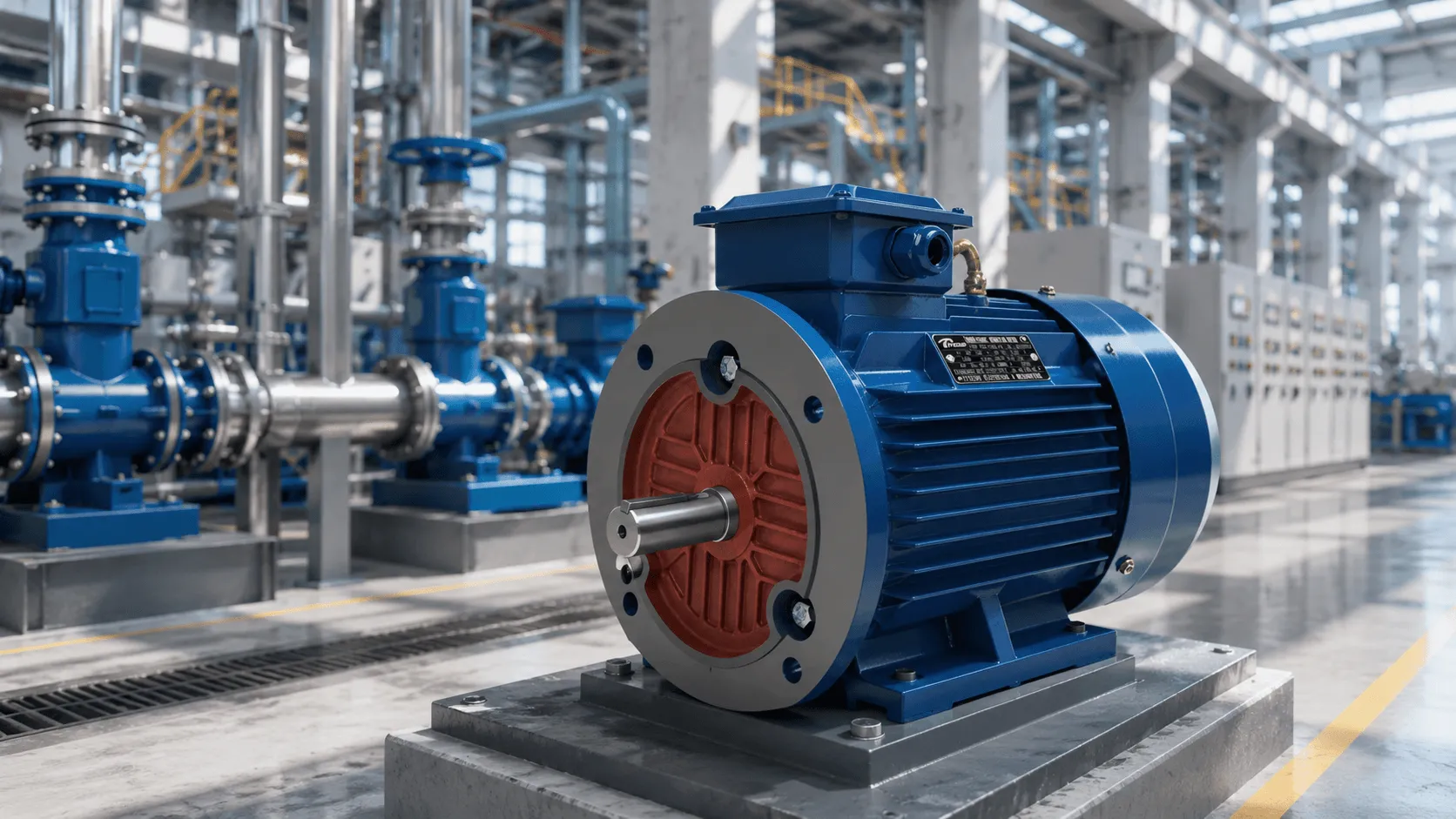
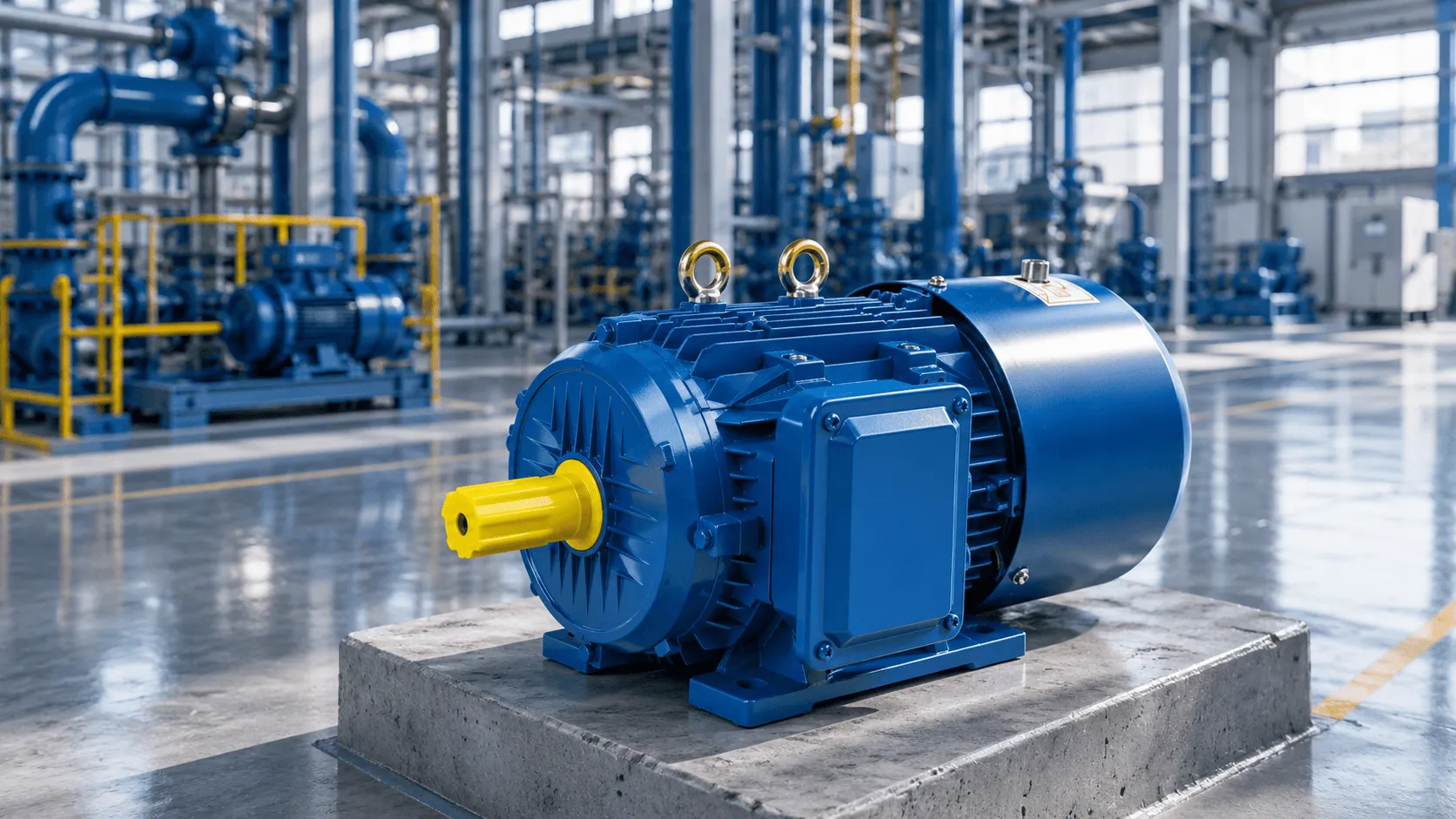
The YD series pole-changing multi-speed three-phase asynchronous motor represents a significant advancement in variable-speed drive technology. Designed in accordance with IEC 60034 international standards, these motors achieve discrete speed regulation through winding pole-changing methodology rather than external variable-frequency drives (VFDs), offering a robust, cost-effective solution for applications requiring stepped speed control.
Unlike conventional single-speed induction motors, YD series motors integrate multiple independent windings within a single stator core, enabling seamless switching between 2, 3, or 4 distinct speed ratios. This inherent design eliminates the need for complex gearbox assemblies or expensive frequency conversion equipment, significantly reducing both capital expenditure and long-term maintenance costs.
2. Fundamental Operating Principle
2.1 Synchronous Speed Relationship
The rotational speed of an asynchronous motor is fundamentally determined by the supply frequency and the number of magnetic poles. The synchronous speed ns is expressed as:
ns=p60f
Where:
- ns = Synchronous speed (r/min)
- f = Supply frequency (Hz)
- p = Number of pole pairs
The actual rotor speed n is always slightly lower than synchronous speed due to slip s :
s=nsns−n×100%
For standard 50 Hz operation, the synchronous speeds corresponding to different pole configurations are:
表格
| Pole Number (2p) | Pole Pairs (p) | Synchronous Speed (r/min) | Typical Rated Speed (r/min) |
|---|---|---|---|
| 2 | 1 | 3,000 | 2,860–2,960 |
| 4 | 2 | 1,500 | 1,420–1,470 |
| 6 | 3 | 1,000 | 920–980 |
| 8 | 4 | 750 | 710–740 |
| 10 | 5 | 600 | 580–593 |
| 12 | 6 | 500 | 480–485 |
2.2 Pole-Changing Mechanism
YD series motors employ the Dahlander connection (also known as the pole-amplitude modulation method) to alter the effective number of poles. By reconfiguring the stator winding connections through external switching contacts, the magnetic field distribution changes, thereby modifying the synchronous speed.
The most common connection transitions include:
- Δ (Delta) → YY (Double Star): Achieves 2:1 speed ratio (e.g., 4-pole/2-pole)
- Y (Star) → Δ → YY: Enables triple-speed operation (e.g., 6-pole/4-pole/2-pole)
- Δ → Y → YY: Provides triple-speed with different torque characteristics
3. Technical Specifications & Performance Parameters
3.1 Standard Operating Conditions
表格
| Parameter | Specification |
|---|---|
| Rated Voltage | 380 V (50 Hz) or 660 V (customizable) |
| Frequency Range | 50 Hz / 60 Hz |
| Power Range | 0.35 kW – 82 kW |
| Frame Size | 80 mm – 280 mm (IEC standard) |
| Protection Class | IP55 / IP54 (IEC 60034-5) |
| Insulation Class | Class F (155°C) |
| Cooling Method | IC411 (Totally Enclosed Fan-Cooled) |
| Duty Type | S1 (Continuous Duty) |
| Ambient Temperature | -15°C to +40°C |
| Altitude | ≤ 1,000 m above sea level |
| Relative Humidity | ≤ 90% |
3.2 Efficiency & Power Factor
The efficiency η and power factor cosφ vary with load and speed configuration. For a typical YD160L-4/2 motor (11/14 kW):
表格
| Operating Mode | Output Power (kW) | Efficiency (%) | Power Factor | Current (A) |
|---|---|---|---|---|
| 4-pole (Low Speed) | 11 | 87.5 | 0.85 | 22.3 |
| 2-pole (High Speed) | 14 | 86.0 | 0.92 | 28.8 |
The efficiency at rated load can be calculated from input and output power:
η=PinPout×100%=Pout+PlossPout×100%
Where total losses Ploss comprise:
- Stator copper losses: Pcu1=3I12R1
- Rotor copper losses: Pcu2=3I2′2R2′
- Iron losses: PFe=Physteresis+Peddy
- Mechanical losses: Pmech=Pfriction+Pwindage
4. Product Nomenclature & Model Interpretation
The YD series model code follows a structured nomenclature system:
plain
YD □□□ □ - □ / □ / □
│  │   │   │   │   └── Fourth speed pole number (if applicable)
│  │   │   │   └────── Third speed pole number (if applicable)
│  │   │   └─────────── Second speed pole number
│  │   └─────────────── First speed pole number
│  └─────────────────── Frame length code (S/M/L)
└────────────────────── Center height (mm)Example: YD160L-4/2
- YD: Pole-changing multi-speed asynchronous motor
- 160: Center height = 160 mm
- L: Long frame
- 4/2: Dual speed — 4-pole (1,500 r/min) and 2-pole (3,000 r/min)
Example: YD160L-8/6/4
- Triple speed: 8-pole (750 r/min), 6-pole (1,000 r/min), 4-pole (1,500 r/min)
5. Torque Characteristics & Load Matching
5.1 Torque-Speed Relationship
The electromagnetic torque T of an asynchronous motor is given by:
T=2πf3p⋅(R1+sR2′)2+(X1+X2′)2V12⋅sR2′
Where:
- V1 = Stator phase voltage (V)
- R1 , X1 = Stator resistance and reactance
- R2′ , X2′ = Rotor resistance and reactance (referred to stator)
- s = Slip
5.2 Load Type Compatibility
YD series motors are optimized for different load torque profiles:
表格
| Speed Ratio | Connection | Torque Characteristic | Suitable Load Types |
|---|---|---|---|
| 4/2 | Δ/YY | Constant Power | Machine tools, conveyors |
| 6/4 | Δ/YY | Constant Torque | Pumps, compressors |
| 8/4 | Δ/YY | Variable Torque | Fans, blowers |
| 8/6/4 | Δ/Y/YY | Dual Torque | Mixers, textile machinery |
| 12/6 | Y/YY | Constant Torque | Hoists, cranes |
For fan and pump applications following the affinity laws:
Q2Q1=n2n1,H2H1=(n2n1)2,P2P1=(n2n1)3
Where Q = flow rate, H = head/pressure, P = power consumption.
6. Dimensional & Mounting Data (IEC Standard)
6.1 Foot-Mounted (B3) Dimensions — Selected Frame Sizes
表格
| Frame | A | B | C | D | E | F | G | H | K | L |
|---|---|---|---|---|---|---|---|---|---|---|
| 80 | 125 | 100 | 50 | 19 | 40 | 6 | 15.5 | 80 | 10 | 290 |
| 90S | 140 | 100 | 56 | 24 | 50 | 8 | 20 | 90 | 10 | 320 |
| 100L | 160 | 140 | 63 | 28 | 60 | 8 | 24 | 100 | 12 | 385 |
| 112M | 190 | 140 | 70 | 28 | 60 | 8 | 24 | 112 | 12 | 405 |
| 132S | 216 | 140 | 89 | 38 | 80 | 10 | 33 | 132 | 12 | 480 |
| 160M | 254 | 210 | 108 | 42 | 110 | 12 | 37 | 160 | 15 | 605 |
| 160L | 254 | 254 | 108 | 42 | 110 | 12 | 37 | 160 | 15 | 650 |
| 200L | 318 | 305 | 133 | 55 | 110 | 16 | 49 | 200 | 19 | 780 |
| 225M | 356 | 311 | 149 | 60 | 140 | 18 | 53 | 225 | 19 | 850 |
| 280S | 457 | 368 | 190 | 75 | 140 | 20 | 67.5 | 280 | 24 | 1,020 |
All dimensions in millimeters (mm). Dimensional tolerances per IEC 60072.
6.2 Mounting Configuration Codes
表格
| Code | Description | Application |
|---|---|---|
| B3 | Foot-mounted, horizontal shaft | General industrial machinery |
| B5 | Flange-mounted, large flange | Pump sets, gearboxes |
| B14 | Flange-mounted, small flange | Compact installations |
| B35 | Foot + flange mounted | Versatile mounting requirements |
| B34 | Foot + small flange | Restricted space applications |
| V1 | Vertical mounting, shaft down | Deep well pumps |
| V3 | Vertical mounting, shaft up | Agitators, mixers |
7. Comparative Analysis: YD Series vs. VFD-Driven Motors
表格
| Evaluation Criteria | YD Pole-Changing Motor | VFD + Standard Motor |
|---|---|---|
| Initial Cost | Low | High (VFD unit cost) |
| Speed Regulation | Discrete steps (2–4 speeds) | Continuous (0–rated speed) |
| Energy Efficiency at Full Load | High (92–96%) | High (90–95% including VFD losses) |
| Energy Efficiency at Partial Load | Moderate | Excellent (optimized by VFD) |
| Maintenance Complexity | Low (mechanical switching only) | Moderate (electronic components) |
| Electromagnetic Compatibility | Excellent (no PWM harmonics) | Requires filtering (PWM switching) |
| Torque Control Precision | Fixed torque ratios | Full variable torque control |
| Environmental Robustness | High (simple construction) | Moderate (sensitive electronics) |
| Typical Payback Period | Immediate | 2–4 years |
| Application Suitability | Fans, pumps, conveyors | Precision control, servo applications |
8. Application Sectors & Industry Deployment
8.1 Primary Industries
表格
| Industry Sector | Typical Applications | Preferred YD Configuration |
|---|---|---|
| HVAC & Ventilation | Air handling units, exhaust fans | 8/4-pole (Δ/YY) |
| Water Treatment | Centrifugal pumps, aerators | 6/4-pole (Δ/YY) |
| Mining & Quarrying | Belt conveyors, crushers | 4/2-pole (Δ/YY) |
| Textile Manufacturing | Spinning frames, looms | 8/6/4-pole (Δ/Y/YY) |
| Food Processing | Mixers, blenders, conveyors | 6/4/2-pole (Y/Δ/YY) |
| Machine Tools | Lathes, milling machines | 4/2-pole (Δ/YY) |
| Agriculture | Grain dryers, irrigation pumps | 8/4-pole (Δ/YY) |
| Chemical Industry | Agitators, reactor pumps | 6/4-pole (Δ/YY) |
8.2 Energy Savings Calculation
For a 30 kW fan operating at 75% flow rate:
Traditional Damper Control:
- Power consumption ≈ 30 kW × 0.85 = 25.5 kW
YD Motor Speed Control (4-pole to 6-pole):
- Speed reduction: 1,470 → 980 r/min (66.7%)
- Power per affinity laws: P∝n3
- Theoretical power: 30 kW × (0.667)³ = 8.9 kW
- Actual with efficiency: ≈ 10.5 kW
Annual Energy Savings:ΔE=(25.5−10.5) kW×6,000 h/year=90,000 kWh/year
At $0.12/kWh, annual savings = $10,800 per motor.
9. Installation, Commissioning & Maintenance
9.1 Electrical Connection Guidelines
表格
| Power Rating | Connection Method | Notes |
|---|---|---|
| ≤ 3 kW | Star (Y) | Reduced starting current |
| ≥ 4 kW | Delta (Δ) | Full voltage utilization |
| Dual-speed | Δ/YY or Y/YY | External contactor switching required |
| Triple-speed | Y/Δ/YY or Δ/Y/YY | Multi-stage contactor assembly |
Critical Installation Requirements:
- Ensure proper phase sequence for correct rotation direction
- Install interlocking contactors to prevent simultaneous energization of different winding configurations
- Provide adequate switching delay (≥ 50 ms) between speed transitions to prevent short-circuit conditions
- Use thermal overload relays rated for the specific winding currents at each speed
9.2 Maintenance Schedule
表格
| Interval | Inspection Items | Action Criteria |
|---|---|---|
| Monthly | Bearing temperature, vibration | Record baseline data |
| Quarterly | Terminal connections, insulation resistance | Tighten if >10% torque loss; Megger test > 1 MΩ |
| Semi-annually | Cooling fan, air passages | Clean if airflow reduced >15% |
| Annually | Bearing lubrication, rotor alignment | Regrease per manufacturer specification |
| Every 5 years | Winding insulation assessment | Replace if polarization index < 1.5 |
10. Quality Assurance & Certifications
YD series motors manufactured to IEC standards carry the following certifications:
表格
| Certification | Standard | Scope |
|---|---|---|
| CE Marking | EU Low Voltage Directive 2014/35/EU | European market access |
| CCC | GB 18613 / GB 30253 | China Compulsory Certification |
| ISO 9001 | ISO 9001:2015 | Quality management systems |
| IECEx | IEC 60079 | Hazardous area applications (optional) |
| EAC | TR CU 004/2011 | Eurasian Customs Union |
11. Conclusion
The YD series pole-changing multi-speed three-phase asynchronous motor represents a mature, reliable, and economically compelling solution for applications requiring discrete speed variation. By integrating multiple speed capabilities within a single motor enclosure, these systems eliminate the need for external speed reduction equipment while maintaining the simplicity and durability inherent to squirrel-cage induction motor design.
For procurement professionals and system designers, the YD series offers:
- Capital cost reduction of 30–50% compared to VFD systems
- Operational simplicity with no electronic components to fail
- Energy efficiency comparable to single-speed premium efficiency motors
- Maintenance predictability with standard mechanical components
When selecting between YD pole-changing motors and VFD-driven alternatives, the decision matrix should prioritize: (1) whether the application truly requires continuous speed variation or can operate efficiently at 2–4 discrete set points; (2) the total cost of ownership over a 10–15 year service life; and (3) the environmental conditions (temperature, humidity, electromagnetic interference) at the installation site.
For stepped-speed applications in material handling, fluid movement, and general industrial machinery, the YD series remains the technically sound and economically superior choice.
Technical data and specifications referenced from IEC 60034 series standards and verified manufacturer datasheets. For application-specific motor selection, consult factory engineering support with complete load duty cycle information.
No comments yet